Build Your Community

Building a thriving learning community for your students is the fundamental core of this website. The work you are doing to create safe and engaging learning spaces is one of the most important things you do. But, do you take care of yourself and build your community? Finding a community probably saved my teaching career. Adding to my community over the last 18 years helped me to continually develop my practice.

Early in my career and before the age of social media, I felt like I was drowning. The people in the school where I worked were kind and honestly good people, but there were only a few that actually supported my learning. With their help I made it through, but I struggled. Thankfully, I found community within a group of literacy coaches a few years into my career. If it weren’t for these mentors, I might have walked away from teaching before I really got started. Besides being a strong support network this group encouraged me to get involved with the nationwide organizations ASCD (Association for Supervision and Curriculum Design and ILA (International Literacy Association). These nationwide groups connected me with people outside my local community of adult learners by attending conferences by sponsored by these groups.

In this age of social media, it is easier than ever to get connected with other educators. If you are reading this post it is most likely due to seeing a link on Twitter or Facebook. However, this post about building your community is not about widening your online network. While I still use Twitter and Facebook and keep up with educational websites, I work hard to not be ‘plugged in’ every single day. I worry about how social media affects my attitude and how too much time online impacts my day-to-day life. I know that I can quickly lose hours of time I could be doing something more productive very quickly. Working on building my real-life community is becoming more and more important to me. This is why I am a member of NCTE (National Council of Teachers of English) and regularly attend events it sponsors.

Over the past six years, some online connections have turned into real-life connections. When I attend events where these people are, my relationships (and learning) grow stronger. During the recent NCTE Annual Convention in St. Louis, I listened to Brian Wyzlic deliver a passionate speech about ensuring every child you teach feels valued every single day. We also had numerous conversations during various times at the conference. While speech affirmed my thinking, I learned more eating dinner with him and walking through the halls. I have known Brian for about 5 years. We have been around each other for maybe 25 days in those 5 years, but learning with and from Brian in real life has been more profoundly helpful than on Twitter.

I had an incredibly thought-provoking conversation with Kristin McIlhagga on Saturday night. After a long day of learning from some of the best educators on the planet, Kristin pushed my thinking was pushed more than anyone else that day. Like Brian, I have only been around Kristen at events like conferences. And while I do learn from her and am supported by her during online interactions, the face-to-face conversations are what really shift my thinking.

I was honored to present with Justin Stygles, Kara DiBarotolo, Cheryl Mizreny, Michelle Best and Laurie Halse Anderson on Sunday Morning. While I knew what was going to be said when they talked, The subtle nuances of body language and tone of voice made the learning more powerful. Plus, the time we spent together outside the session cemented the fact I am proud to know them. I met Michelle or Laurie at NCTE look forward to connecting with them again in the future. They are both smart and very passionate about their work. Justin, Kara and Cheryl have been go to resources for a while, but we wouldn’t have the relationship we have if it was completely online.

Throughout the entire NCTE convention my actual conversations with other attendees that I have known for years and ones that I just met over the weekend made the cost and the effort to attend worthwhile. I know the VISA bill will suck next month, but I cannot imagine not going next year.  

Real-life professional connections, both local and not-so local, support me and challenge me. The online world is a great place to start, but do whatever it takes to get to places where your online connections meet in real life. The echo-chamber of social media is not necessarily bad, but I think you can only find true support to push your thinking in the real world. Think about your classroom. Would you let your students do a completely computerized curriculum with only random comments of a few sentences provided by you? Probably not. So why would you do it to yourself?

I encourage you to consider building your community by joining an association, either local or national and attending their conferences or other conferences near you. I guarantee it will be worth your time. Below are links to various professional organizations that support educators. They are all designed to help you. They want you to engage in a bigger community.
ACEI, Association for Childhood Education International (www.acei.org)

ACTFL, American Council on the Teaching of Foreign Languages (www.actfl.org)

AECT, Association for Educational Communications and Technology (www.aect.org)

AERA, American Educational Research Association (www.aera.org)

ALAS, Association of Latino Administrators and Superintendents (www.alasedu.net)

AMLE, Association for Middle Level Education (www.amle.org)

ASCD, Association for Supervision and Curriculum Design (www.ascd.org)

ASCA, American School Counselor Association (www.schoolcounselor.org)

CEC, Council for Exceptional Children (www.cec.sped.org)

ILA, International Reading Association (https://www.literacyworldwide.org/)

ISTE, International Society for Technology in Education (www.iste.org)

NAEA, National Art Education Association (www.arteducators.org)

NAESP, National Association of Elementary School Principals (www.naesp.org)

NAEYC, National Association for the Education of Young Children (www.naeyc.org)

NAfME, National Association for Music Education (www.nafme.org)

NAGC, National Association for Gifted Children (www.nagc.org)

NASSP, National Association of Secondary School Principals (www.nassp.org)

NBEA, National Business Education Association (www.nbea.org)

NCSS, National Council for the Social Studies (www.ncss.org)

NCTE, National Council of Teachers of English (www.ncte.org)

NCTM, National Council of Teachers of Mathematics (www.nctm.org)

NSTA, National Science Teachers Association (www.nsta.org)        

 

When You Know…

Dismissal time comes and goes every day and every day I start to worry a little bit.  Our school procedure is involved.  It requires me to walk with my students through the hallways to various drop of points and then taking my bus riders outside to their individual buses.

I worry about this time of day.  I have a clipboard with daily sheets for our “going home” plans.  Changes happen and I note them with post it notes.  I “lost” a kindergartener once and quickly found her in a different drop off location but I’ll never forget that worry and shutting my classroom door to burst into tears.  I am blessed to spend each day with my students and I think my biggest job is to get each student back home safely to their families.

It was about a month or two into this school year and we were getting organized for dismissal.  The students had their backpacks.  They were sitting at the carpet and I had started to line them up according to the order of their drop off location.  Everything seemed to be in order when I heard, “George come here, she already called your name.  Right here is where bus 51 goes.”

I watched and thought, Bingo; we have a classroom community!  It was such a small moment and one that could be easily over looked.  A student was looking out for a classmate and wanted to make sure he was on the bus with him to go home.  I wish you could have heard his voice; the helping student had a kind and caring inflection.  A nurturing voice with a sense of urgency.

When do you know…what small things can we look for to confirm there is a community in our classroom?  These two boys don’t necessarily share common characteristics or interests besides attending our classroom together but I would add to the dictionary’s definition of community to include – individuals who spend a lot of time together and care about each other; showing acts of kindness.

Big Payoff through Small Moves

One of the things that I am still adjusting to as a new assistant principal is managing my time and being able to build positive relationships with students. When I first assumed my position, I had big plans of regularly scheduled blocks of time to meet with students, especially the ones that I had grown quite close to over the years. And then I quickly realized that there are days that I have much less control over my schedule and sometimes more fires to put out than I imagined. Despite that, I still actively work to develop stronger relationships with students because spending time up front building a relationship will pay dividends later. Although small, I’ve tried to be intentional about:

Reading a book that I know a kid will like and then give it to them. Just the other day I read Jason Reynolds’ Long Way Down, and I knew right away that I had to get it into a student’s hands. The internal conflict that the main character faces is similar to this student’s very decision he is making in regards to his own life. I was so excited to get this book into this young man’s hands, and I could tell from his reaction that he was surprised. And he soon indicated to me that he’d never before had an adult read a book and think of him.

Sending a positive post card. Working with teenagers truly is wonderful. There are so many small things that can go unnoticed throughout the day, but I can assure you that I am surrounded by so many young people who will make truly great adults. From volunteering to help a student carry her backpack as she heals physically to helping another student out who has collapsed, young people amaze me. I really enjoy sending out these small notes to parents and guardians who don’t get the pleasure of seeing such great behavior on a nearly daily basis.

Calling a student down to celebrate positive news and achievement. I don’t like to call students to my office during class, but I have quickly realized that for some students, it has been a really—and I mean really—long time since they have heard something positive about themselves. Every now and then when I “drop in” to check on students’ grades and I notice something positive, I have to let them know. Small reminders of hard work and progress matter, and it’s even a bigger deal for a principal to recognize that hard work.

Just saying, “Hi.” I truly believe that every young person who walks in our doors should be spoken to at least once each day, but I know that there are some students who probably are not spoken to at all. When I pass students in the hallway, I intentionally try to model good behavior and friendliness, saying “Hi” to many students, even the ones I don’t know. I may not know a student that well, but I can show that I care about their success and well-being by just saying something so simple.

Noticing small changes in behavior and mannerisms. This is similar to the move directly before, but a little more complicated. When we see young people every day, even if it’s only in passing, we can begin to notice patterns of behavior and mannerisms. If a student is usually smiling every day when you pass them in the hall and today they are not, then I have found it makes a huge difference to talk to them about this. By acknowledging that you have noticed a change, it signals to the student that you see them every day, even if you don’t talk to them. And when you notice a change, you care.

Following up, even when it’s easier not to. Even if it might not seem a big deal to us, students appreciate when we follow up on what seems like a big deal to them. If they’re sick, we can ask them if they’re feeling better. If they’re having a rough time, we can ask if things have improved. If they mention an upcoming test, we can ask how they did. I’ve found that when I follow up with a student, it shows that I really listened to the small details they’ve shared with me and that I’ve really “heard” them.

What are some small things that you do that you think really signal to students you care?

I Burped In Class Today

The following is a written account of an actual event that occurred in Scott Jones’s fifth grade classroom in October 2016.  Mr. Jones acknowledges that this was not his finest teaching moment. He will also not be making any further comments about this event. Yet, he believes it’s important to share his experience so others can learn from his mistakes…

October 2016

I burped in class today. For real.

Our minilesson got underway as twenty-five eager faces stared at me from the carpet after a very active lunch and recess. Today’s writing learning target was “ Writers learn how to add dialogue to their narrative to move the story forward and to reveal character.”  We were revising our personal narratives, and many students needed help on how to use dialogue properly. I had the perfect mentor text ready to go. I had a nice, organized anchor chart to capture the highlights of this minilesson. I was on a roll.

It was one of those moments that classroom communities have when the stars are aligned and everything is working.  Everyone was focused and alert.  There was an energy in the class that was palpable.  There was no doodling on journal covers, no picking at eraser tops, no playing with shoelaces. I had their full attention. They looked at me. I looked back at them. Our eyes locked with anticipation of the next insightful statement that would float from my mouth and land onto the pages of their writing journals.

As I opened my mouth to share my next pearl of wisdom, it happened. What my students heard next was no pearl of wisdom. More like a nugget of smelly air. It crept up my throat like a foghorn in the dense, morning fog. I was not prepared for this. This had never, ever happened to me before. This burp was supposed to be a private little moment, but it had now been exposed to the world.  Writing coach and author, Ruth Ayres, uses the phrase “going public” when describing how writers publish their work. Surely, she did not mean this.

The five seconds of silence that followed felt like an eternity. They were all looking at me with their heads cocked to the side like a dogs. The expressions on their face asked, Did that just happen?  It did happen. All I could do was own it and share that this had never happened before. The laughter that followed spread around the classroom until it eventually hit me. There was nothing I could do but laugh. I had literally just burped, and burped loudly, in front of my class.

The next day’s learning target: Sometimes writing is like a giant burp. You never know when you’ll be inspired to do it.  Ideas, like a burp, can creep into your mind when you least expect it.


Rebuilding Communities

I have, for the first time in 19 years of teaching, sold my planning period. I took over a class of sophomores and juniors with a little more than a week left in first quarter.

We talk about building relationships, but what about rebuilding relationships? What about repairing classroom communities after a teacher leaves before the end of the year? And how do we balance the needs of teachers with the needs of our students?

Two weeks ago I stood in our hallway discussing the situation with my next door neighbor. We knew that one of us would need to take over the class. It’s an elective that’s part of a program that we’re building at our school, and we couldn’t leave a guest teacher in charge long-term.

My neighbor and I were the logical choices. We had the necessary planning period and were part of the program’s site team; she already taught the elective to another grade level, and I knew that I was on deck for future sections.

But not in the last week of October with no warning.

It wasn’t an opportunity that either of us wanted. Our English department has a new curriculum this year, and we still haven’t even previewed the materials for second semester. We’re a department heavy in young teachers; all of their experience, my neighbor’s included, adds up to fewer years that I’ve been teaching, and that’s including our middle school colleagues. The high school teachers finally had a planning period together and were meeting weekly in our PLC. We’d already scheduled as many after school meetings as we could with our middle school colleagues; one of us losing our planning period would definitely leave us scrambling for enough time to meet.

But somebody had to do it.

I explained all of this when I sat down with the program’s director. We talked about what the class needed in a teacher and why it had to be me. My schedule is the one that’s easiest to adjust at the semester, though getting back the same planning period as my colleagues is a long shot. Even though the work that we do as an ELA PLC impacts every single student in our building, common planning time is about the teachers.

The needs of the students outweigh the needs of the teachers. Always.

And so, on the 39th day of the school year, the class became mine.

What are the needs of the students when a new teacher takes over a class, be it a planned takeover like a student teacher or a long-term sub in an emergency? How do we rebuild relationships with students who had finally started to trust the previous teacher? And how do we do this is a hurry, fast, without the leisure of the first slow weeks of school? Second quarter is upon us, we’re a quarter of the way through the year, there’s no time to stop and bond, we have curriculum to cover.

But is that the right call? Do we start on day 39 without the building blocks of all those early learning experiences? Or do we stop to take the time to rebuild, to establish community, to begin again?

What’s best for our students?

I’ll let you know when I figure it out.

The Importance of “Our”

Most reading this blog know that language matters. Many of us have dedicated our careers to the notion that the written and spoken words of humans are important and will continue to be. We analyze speeches, we critique our writing and that of our students, and we very carefully word assignments to avoid ambiguity. Even the standards and outcomes we use and create for our students go through draft upon draft upon draft.

Words matter, and we know this.

But there is always room for improvement. Always something we can do better. What about the way we speak in our schools? What about the simple words we use and the impact they could have? Have we considered what even the shortest words we use mean?

I’m talking about the distinction between “my,” “your,” and “our.”

Imagine the following sentences being said between colleagues in the same building:
“My students rocked that science fair!”
“Your students were talking loudly outside my classroom today.”
“My students didn’t do very well on their thesis statements.”

Now imagine them with just one small little tweak:
“Our students rocked that science fair!”
“Our students were talking loudly in the hallway today.”
“Our students didn’t do very well on their thesis statements.”

Small changes. Big impact.

If we are going to have schools that really have us all working together for the success of all students, we need to think of all students as all OUR students.

Then the conversations are less
“I’m sorry you’re having trouble with your students’ scores, but mine are fine,”
But more
“What can we do to get our students’ scores up?”

Less
“I’m going to try this new method with my students,”
But more
“I just learned this new thing. I’ll try it with the students in my room, and then we can talk and see if it’s something we should try with all our students.”

And while I don’t want to now argue against myself and say that all of that is not important, it really isn’t even the most important.

What’s most important are the children entrusted to our care each and every day. How we talk about them when they’re not around is important. It is.

But it’s not as important as the way we talk with them when they are around.

Imagine these sentences being said by a teacher to the students in their care:
“In my classroom, you will raise your hand if you want to speak.”
“I like my bookshelves arranged by author’s last name.”
“I want you to put your name in the top-right corner or I won’t give you credit.”

I. I. I. You. You. You.

I I I would not want to be a student in that classroom.

Now imagine those sentences with slight tweaks:
“We’ve decided that, in our classroom, we will raise our hands if we want to speak.”
“We’ve decided the bookshelves in our classroom will be arranged by author’s last name.”
“We’ve decided one of the things we will all do is put our names in the top-right corner of our papers when we want credit for our work.”

We. We. We. Our. Our. Our.

I don’t even think I need to ask the question of which classroom a student would like to be in more.

Of course, this is not just a pronoun shift, but a mindset shift as well. If the students are “our” students, and not “my” students and “your” students, then we’re all responsible for all of them, and we need to collaborate and plan accordingly. We cannot be left alone to teach on an island, for the students are not on islands. We’re all in this together.

High School Musical

Similarly, if the classroom is “our” classroom, and the students are not merely visiting “my” classroom, then we need to take some time to work on some norms and behavior expectations together. I, as a teacher, need to give my students say in what happens in the room and how. They get to have a very meaningful voice in what the room looks like. It’s difficult work. It’s messy at times.

But I promise you: there is nothing better than a classroom where every student feels valued, welcomed, heard, and wanted. Where every student feels part of an “us.” Where every student is part of the “our” to which the classroom belongs. It can start simple: a shift from “my classroom” or “the classroom” to “our classroom.” If you haven’t made that shift yet, try it. See how the students respond.

I bet you won’t look back.

Invest in Why

Screen Shot 2017-11-01 at 11.09.46 PM

A while ago I saw a new post in one of my educational Facebook groups. The author wrote something like, “Does anyone else get frustrated with the fact ELA teachers teach the same basic concepts year after year, but high school students still can’t write a paragraph?” To be honest, I initially sympathized with the individual who was brave enough to share this with the group. It can be frustrating to work with students year after year who can’t seem to consolidate learning. Even though I could see there were many comments, I felt like I had nothing to add. It is hard for me to engage in online discussions that on a surface level disparage kids. Normally, I don’t check the comments on a post like this, but I wondered if there were any ground-breaking ideas shared. I was hoping to see something to push my thinking, but sadly there were over 200 ‘amens’ or other rants about how texting, technology, and/or previous teachers or curriculum coordinators were not doing their jobs.

I kept thinking about this thread and rereading it over during the next few days. It was like a car accident on the side of the road. I didn’t want to acknowledge it, but I could not help myself from looking.  After more rereading and thinking I noticed something about the cumulative nature of the comments. There wasn’t a single comment I read that dug into the “Why?” As in “Why do we expect kids to write a cohesive formulaic paragraph?”. There were lots of “why can’t they …” comments, but I couldn’t find one that even scraped the surface of “why” the kids should be writing this way. Before we go any further, please know I could rattle off lots of reasons why writers use paragraphs, even ones I don’t think are sound reasons. I also want you to know the topic of this comment thread doesn’t really matter to me. I can imagine a different stream of frustrated educators venting about mathematical thinking, behavior, lack of parent support, administrators, etc. I think this thread was a prime example of one of the biggest concerns I have about education. We expect kids to do things, but I think we don’t explore the purpose of doing those things on a regular basis.

If we want our classrooms communities filled with engaged learners, we need to “invest in the why” we are doing what we do frequently. And the “why” needs more relevancy than because I said so, because it is in the standards, or a general because it will help you in the future. No matter what age of learners in our classrooms, I believe they are capable of processing highly complex tasks if they invested in why they are completing it. Even if the “why” is a self-motivating, “because it is fun.” I have seen preschoolers build complex towers with Legos and high schoolers use design software and 3-D printers to prototype and evolution of the  soccer shin guard. I have seen 2nd graders write a compelling persuasive letter to a principal and middle schoolers write an in-depth character analysis essay. These examples don’t even scratch the surface of what our students are capable of doing. Look at all they do outside of our classrooms. They perform ballet, create Youtube channels, memorize play books for football teams, teach themselves fly fishing, build skateboard ramps, the list goes on forever.

When I started teaching in 1995 one of the first educational authors I read was Brian Cambourne. If you do not know Cambourne, google his name and “Seven Conditions of Learning.” After 20 years Cambourne influences my thinking. I have worked diligently to create classroom learning experience that are engaging and empowering for my students. Cambourne’s conditions include ideas like immersion, demonstration, expectation, and response in order help students learn while working. Cambourne believes that learners will engage in highly complex learning if they see “some potential value, purpose, and use for them.” (The Reading Teacher; Vol. 49, No. 3; November 1995) As Cambourne’s work influenced my work, I realized in order for learners to grow, they needed to invest in why they were doing the work expected of them.

The core of my work is now letting the kids know, discover or choose the “why” they are doing something. Currently some of my 7th grade students are taking up the challenge of writing a novel in 30 days (NaNoWrimo) and others are working on shorter narrative pieces during the month. Yes, we have targets, guidelines and daily goals. And the kids know our district curriculum expects them to work on narratives in the second quarter of the year, so if my administrator walks through the classroom and asks the kids what are you doing, they will be able to explain the “what”, but they will also be able to explain a “why” or two. For some of my students the current “why” is to challenge themselves to write something “big”, for others the “why” is to make their audience cry or to become better at writing dialogue.

I know their narrative work may not directly connect with the Facebook thread I mentioned earlier, but my students passionately invest in the work they are doing. In all my classes today, the only frustration I saw was when it was time to leave the room. Sure, there will be kids I work with who won’t be able to write a paragraph the way their teacher might expect a few years down the road, but all of them know that one reason writers organize thinking into paragraphs is to make a piece of writing easier for a reader to understand. So hopefully, if they move to another state and get one of those teachers who vented in that Facebook group, their teacher will be able to tap into a “why” for them. I am pretty sure if the teacher does, the students will want to become better.

The Book Buzz: Promoting a Reading Culture by Letting Students Shine

Unintended consequences can be powerful.  They are probably the best thing about a new project.  You begin with an ending in mind, only to find that some of the best parts are those you never even dreamed of at the beginning of the project.  That’s exactly what happened with The Book Buzz.  

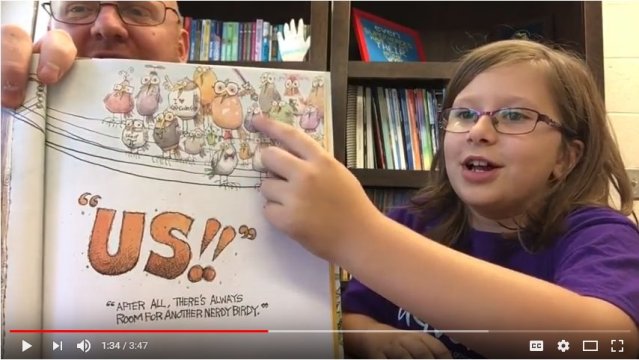
This year our entire school decided to participate in Jillian Heise’s #classroombookaday project.  Every classroom would dedicate time everyday to read a picture book aloud to students.  As a staff, we brainstormed books to share, built fun bulletin boards to track our reading, and educated parents about the benefits of this initiative.  I struggled to figure out how I could best participate as the principal of the building.  During the first two weeks of school, I took time to visit each classroom as a guest reader to help promote #classroombookaday.  I told students that I was excited that they were taking time each day to read a picture book and that I planned to read a picture book every day as well.  I even turned my office door into a giant grid where I would add the cover of the book I read each day so the students could see my progress.  Even after all these efforts, it felt like something was missing.  It felt more like I was participating alongside the students than with them.   That’s when the idea for The Book Buzz hatched.

I am always looking for new ways to build relationships with students.  It’s the part that I miss most about being in the classroom.  As a classroom teacher, you spend 8 hours a day with your students.  You know their wishes, their dreams, their fears, and their stories.  As a principal, it’s just not possible to have this same relationship with every student in the school.  However, I have never stopped trying.  My original idea for The Book Buzz was pretty simple.  I would talk to a student each day about a book they enjoyed during #classroombookaday, we would film it, and post it to YouTube.  I didn’t know anything about having a YouTube channel, other than my two boys spent an unbelievable amount of time watching a British guy with cool hair play Minecraft for hours each week.  Although I didn’t totally get it, I knew YouTube was a big deal to kids.  

After reaching out to a couple of colleagues and watching several YouTube tutorials on how to create a YouTube channel (none done by any British guys with cool hair), I was ready to begin.  I knew I wanted a short musical opening with pictures to introduce the show each day.  This was really easy to create in imovie.  I snapped a couple pictures from around the school, uploaded them to imovie, added a preloaded theme song, and the intro was complete.  Although this took time initially, it became much easier with each new try as imovie allows you to easily save the intro and add it to another video with one simple click.  

For the first episode, I asked the fifth grade teachers to recommend a student that really loved one of the #classroombookaday books that had been shared so far this year.  I made sure I had a copy of the book the student wanted to share, asked them to bring their independent reading book as well, and had the parents sign a permission slip for filming and publishing.  Within 20 minutes, the first episode was up and live for the world to see.

Now, it’s important to understand what The Book Buzz is and what The Book Buzz is not.  

The Book Buzz is not:

  • It is not a professionally recorded show.  We don’t have an expensive camera (I use my ipad) and we don’t have high tech microphones (although we are trying to find a way to improve the volume).  
  • It is not rehearsed ahead of time.  I have the student reread the story right before filming so it is fresh in their mind, and I usually ask them their favorite part immediately before filming.  That’s it.  
  • It is not a show with a lot of editing.  We usually film one take and leave our stumbles and mistakes for the world to see.  The goal is not to be perfect, the goal is to be genuine.  

The Book Buzz is:

  • It is so much more than I ever imagined when I first had the idea to start the series.  Originally I intended it to be another way to build the reading culture in our building.  Kids talking about books and sharing recommendations.  
  • It is a way for me to be more involved in the #classroombookaday initiative.  
  • It is an opportunity for kids to have an authentic way to talk about books.  

I knew they would think filming a YouTube show was cool and fun.  However, it ended up being so much more.  One of my favorite parts of starting any new project are the unintended consequences, those things that happen by accident that you didn’t plan for or imagine.  Unintended consequences are the cream in the Oreo for me.

My favorite unintended consequence from The Book Buzz is how The Book Buzz became one of my best relationship building tools with students.  I love that I have 20 minutes carved out every day that I spend one-on-one with a different student. We always spend the first 5 minutes just talking, sometimes about books but most of the time just about what is going on in his or her life.  It’s been awesome.  I have also noticed that I am having more meaningful conversations in the hallways, at lunch, or on the playground with the students that film on The Book Buzz.  It has also been a great relationship building tool with parents.  Just about every parent that has had their child film an episode has emailed or called to say how excited their child was to film the episode and that they appreciated their child being given the opportunity.  

I knew The Book Buzz was going to have a positive effect on the reading culture in our building.  However, I completely underestimated the effect.  I never imagined that students would subscribe to the channel and watch the videos that didn’t feature themselves. I always ask the kids before filming if they have ever watched an episode of The Book Buzz and almost every student has responded, “Yes.  I watch them every day when I get home.”  I was amazed to hear how many teachers were showing the episodes in class as a book talk for a book they wanted to “bless” in their classroom. 

Zoe2


The final unintended consequence from The Book Buzz and probably the most important was how it gave students a chance to shine simply by being themselves.  They were so excited to share their episode with family, friends, and other students.  I knew The Book Buzz was a success when I overheard a conversation in the hallway:  

“I loved your Book Buzz video.  It was so good.  I think it is going to go viral.”  

The featured student had the biggest smile on her face and replied,

“Aww. Thank you.  I feel like a YouTube star.”   

The Book Buzz isn’t a fancy production.  It has low sound quality at times and we often stumble over our words.  But it’s perfect to me.  It gives me a chance everyday to spend time, one-on-one with a student.  It gives me a chance everyday to build a better relationship with a student.  It gives me a chance everyday to focus on the most important part of my school: the students.  Most of all, it gives those students a chance to shine, everyday by simply being themselves.

“BE U x 2” – Peter Reynolds

You can watch an episode of The Book Buzz by clicking on the picture below:

ainsley
If you would like to start a similar project in your building, please feel free to email jcbailey@stcs.org.  I am happy to answer any questions or share any materials I have created for the project.

Reading Engagement in a non-AR School

This week Colby Sharp posted the most heartfelt message about Accelerated Reader and to say it went viral is an understatement. Colby’s passion and ire about a practice that we’ve long known is counterproductive bleed through in this video . If you haven’t watched it, you should. It’s as real as real gets.

Screen Shot 2017-10-27 at 11.18.08 AM.png

Colby is mad and rightfully so. This topic is not a new one. We know there is little research to confirm that AR increases reading achievement, or turns out readers beyond the books in the system, as Donalyn Miller wrote extensively about 7 years ago. We know the assessment that “places” these readers and provides a reading level range is flawed. Pernille Ripp digs into that assessment in this blog post which includes a response from Accelerated Reader’s parent company, Renaissance Learning.  

We know all this, and yet AR is still widely used as a reading achievement indicator and reading incentive. Colby’s message lit a fire in me and I went down the rabbit hole of reading the comments. The sheer number of those in defense of AR still baffles me but what I really took away from these comments was that human connection was never mentioned. I find it difficult to believe that a computerized program alone is the sole factor in a school’s increased reading engagement and achievement. I would strongly argue that a computer is not what gets kids excited about reading….people do.

The school I work at is the only elementary building in our district that does not participate in Accelerated Reader. At a district-wide meeting a couple years ago, this came up and a colleague was utterly shocked. She didn’t ask about our readers. She didn’t ask about our teaching. She didn’t ask how we focus on literacy in a very large, very diverse school. She only asked, in an incredulous voice, “How do your kids pick out books?” In my shock and disbelief, I didn’t reply. What I would say today is this, “We build relationships with kids, and each other, around books. We get to know the learner behind the numbers.”

So how do kids pick out books in a non-AR school?

  • You read. Whatever your role in teaching is, you should be reading and talking about it with kids. No excuses.
  • You know authors. If you don’t, get to know them. They love to connect! Visit their website. Go to an author event at your local library. Follow them and connect on social media. Skype with them. Many authors Skype for free. Kate Messner’s website provides a nice list here.
  • You connect. Connect with kids over books you’ve read in common. Connect with other teachers in your school, district and on social media. Connect with other educators on Goodreads. Connecting leads to relationship building. This is where the magic happens.
  • You book talk. Put yourself out there and be a role model. Kids will read what you recommend.
  • You let students book talk. Kids read what their peers recommend. Katherine Sokolowski has a great post about student book talks over at Nerdy Book Club.
  • You give them total choice in the library. To quote our beloved librarian and some teachers in our school, “This is a library. They can get what they want.”
  • You use technology to provide more access to books in a variety of formats. Have you heard of Epic? I strongly encourage you to look into this because it’s FREE for teachers. It includes thousands of high quality titles and students can access through the web or mobile app. If your school or district has a digital library, include audiobooks. This can be a game changer for many kids.  
  • You talk to kids about what they are reading. This is a great way to personalize connections with students. You can get a lot of mileage out of a few well-planned questions. The wonderful thing about talk is it can happen in a variety of ways. It can happen as you’re greeting them in the morning, lining them up for recess, waiting during restroom breaks, etc.
  • You listen. There is nothing quite as authentic as giving your complete attention to a child when they are talking about a book. It shows you care about what they have to say. If you are doing reading conferences with kids, take a step back and just listen. Don’t always make it about completing a form.
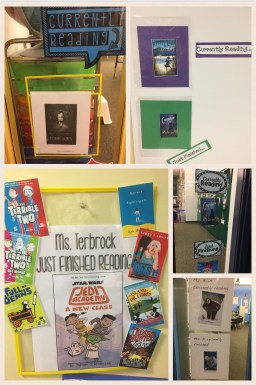
  • You display what you are reading. Staff members all over our building display book covers of their reading lives. Kids notice.

IMG_0704.jpg

This list is by no means conclusive nor is it earth shattering or cutting edge. However, it does address the age old question of how your kids pick out books without a computerized system. It starts with you. People are what drive engagement and achievement not computers. 


Honest Conversations

Hallway Talk:

“ I cannot believe that I said yes…” I shared with a colleague one busy October morning as we walked our students back to our classrooms after art and music. I explained to my friend about an upcoming presentation I agreed to do at our neighboring middle school.  

“Do you think middle school teachers could really use any ideas I have to share?  I think saying yes to hosting this presentation was a mistake…” I added with a jittery feeling of dread.

“Well you’re not sounding very confident…” came a bubbly voice a few steps behind me.  I pivoted to see the smiling face of Gabby, a charismatic and outgoing student and the source of the unexpected comment.

“Do you want to talk about this with us?” she said with her dark eyes shining while beaming a most genuine smile.  

Surprised was an understatement describing my immediate reaction to Gabby’s question.  I was not expecting a child to hear, let alone listen and then process my worries. Unexpectedly, Gabby reacted and reached out to offer caring support.  Moving past the idea of looking under-confident to a child, I was intrigued by the possibilities of this learning opportunity.  What would students say when their teacher revealed her nervousness about an upcoming presentation at another school?

“We always talk about characters and the conflicts they face in their stories.  This time we could problem-solve with you and figure out this inside problem.” chirped Gabby, scurrying to walk beside me so we could chat.

Wait…what….???  My eyes must have widened-so Gabby continued her chatter.

“In class we always talk about characters having conflicts that happen on the outside in their world and also the struggles they have on the inside with their feelings.  Well… I can tell you are worried…your eyebrows have that crunched together look and your voice doesn’t have the usual pep.” replied Gabby.  

The life of a teacher is filled with the necessity of being flexible and accepting the spontaneous needs of children.  Ordinarily, I was accustomed to being the one supplying advice or helping students to craft solutions.  Taking a risk and accepting advice were two choices I often encouraged my students to  consider.  What would happen if I showed my students the power of reflection and the acceptance of help?  What did I have to lose?  More importantly, what did my students have to gain?


Unexpected Conversations

“Gabby is going to lead a discussion…” I announced to my students as we settled into our classroom’s community area.

“So you can make an oval to chat.”  directed Gabby, finishing my sentence.  Once she had the team’s full attention, she explained why we were gathered and shared her thoughts on the conversation she overheard.

“And I wasn’t really eavesdropping…” she added. “Mrs. Smith was talking about a presentation, which is just like a lesson with us, so I figured it wasn’t a private topic.  I think she would pick a better place to talk about private topics than the hallway.”

(Note to self-always assume someone is listening to you in the hallway.)

“So it seems that Mrs. Smith is worried about talking to a group of teachers for a presentation.” Gabby stated with a serious and confident voice. “I think she needs a conference.  Who would like to start?”

“What are you going to talk about with the teachers?” asked Michael.

I explained how my talk would focus on conferences with students during Reading Workshop.  I would describe how we talk about books and students’ reading lives. I was greeted with smiles and lots of nodding heads.

“Is that all?” asked Steele.

I continued, explaining how I would also show the way we use Google Forms to collect information about readers and then how we use the information to keep growing as readers.

“Why are you worried about sharing?”  added Steele after hearing the additional information.  

I was intrigued by the comfortable conversation hosted by students; their questions peeled away the layers to reveal my question:  Were my worries stemming from my teaching practices or the perceptions of my middle school colleagues?


Honest Revelations

“I don’t know my audience very well…so I am wondering if the information I share will matter to them and their teaching.”  I confessed.

“I felt that way when I had my first reading conference with you.  I figured you had already read the book, so what else could I say about it?” answered Tony.

“Yeah…me too.  But you let us talk.” added Sheri.  “You wanted to know what we thought about our books.  Isn’t that what you are going to do?  Share what you think about reading conferences?  So really this presentation is just like a conference.  Instead of one teacher listening, you will just have a bunch of teachers listening…Don’t you think the other teachers want to hear what you have to say?  You always want to know our thinking in a conference.”

“I never thought about it that way before.” I answered.  This conversation was more than a pep-talk.  I was learning about my own classroom community and the bonds created through reading conferences and conversations.

“Are you going to tell those teachers about the Google Forms because they help us?  Are you going to explain how the conference forms lets us feel confident and helps us tell you more about the books we’re reading?” asked Maria.

“The form helps you to feel more confident?” I asked, rather surprised by this news.

“Well of course…when you started conferences at the beginning of the year, you kept the form on the SmartBoard for everyone to see- even if we weren’t having a conference.  We saw and heard what you were doing in a conference. Then we knew what to expect when it was our turn to talk with you.”  Maria added, looking surprised that I had to ask that question.

“Letting us see the form on your laptop during conferences really helps too.   You also have our Book Partner charts nearby to help us with possible topics for our conference talks.  All of this stuff made our conferences easier… and then conferences became fun.  Didn’t you know that?” responded Emma with kind disbelief.  

“So about this talk.  I’m really confused.  Are you worrying about the talking or about whether or not people will listen?”  Gabby finally asked.  

Wow.  In one kind but direct sentence, Gabby summarized my worries.  The wisdom of children means you need to be ready to wrestle with some hard truths.  It never dawned on me that it wasn’t the talking that had me worried, but would my audience care enough to listen.  This short “conference” helped me focus on empowering ideas and now I could conquer my concerns as a presenter before a new audience.


Lessons Learned

A 10 minute conversation with my students accomplished more than easing my worries about a professional presentation.  Our talk confirmed my beliefs about class conversations and the confidence gained from a powerful literacy environment.  My students reaffirmed how meaningful conversations build the foundation of a supportive classroom community.  This confessional conference reminded me of the following truths:

Be a listener.  

Let students talk so you can discover their perceptions of selected classroom practices, routines, and rituals. By slowing down and letting a child lead the conversation, who knew I could receive reflective and powerful feedback from my students?  By publicizing my worries about an upcoming presentation, I actually discovered how important reading conferences were to my students.  In turn, my students realized that their observations and advice helped me feel more confident; their words helped me realize the necessity of being brave so I could share my ideas with others. Empowerment can be a shared experience.


Be vulnerable.  

We all have our worries and baggage that we try to compartmentalize and hide away when we live and work in our communities.  Decide when sharing your concerns and looking vulnerable is worthwhile so you can hear truthful comments from those around you.  Be open to the messages of your colleagues, your school families, and from children.  My unexpected confession to students reinforced the idea that we need one another.  Sometimes we need support.  At times we need to celebrate.  Each of us needs someone to listen.  We all need caring people in our lives to grow.  When students understand they play a role in creating a supportive community, we encourage children to be invested in themselves and in others.


Be appreciative.

When our short ten minute conversation came to a close, I was compelled to share my gratitude.  I made sure my students understood that I valued their advice.  I commended their empathy, thanked them for listening and congratulated them on supporting me even when they didn’t quite understand my concerns.  Their ideas shed new light on the powerful possibilities of Reading Workshop conferences. I thanked them for the way they focused on positive elements and solutions, helping me to find my purpose, and in the end my confidence.  I let them know that instead of making me feel silly for speaking my worries, I felt stronger for sharing the truth.

 
Confidence In Our Communities

No matter where you teach, our classrooms hold the potential power of a supportive community.  When we listen to the honest conversations of our students, their words and perspectives reveal perceived roles in our carefully designed community.   How do students value classroom practices, routines, and rituals?  Do students see themselves as contributing members with ideas to share?  Are they confident enough to offer advice?  Do students care about one another, including their teacher?  

As educators, we know our roles as leaders, mentors and guides.  Do our students understand their roles in classrooms?  We need our students’ perspectives and ideas to create thriving communities.  When Gabby asked me:

“Do you want to talk about this with us?”

I never anticipated the empowering feedback I could receive from children.  I learned that our team gatherings and individual conferences were more than instructional practices.  Our classroom communities can be the places we find our people, our voice, and the confidence to speak.  Our communities can help to discover the power of us.