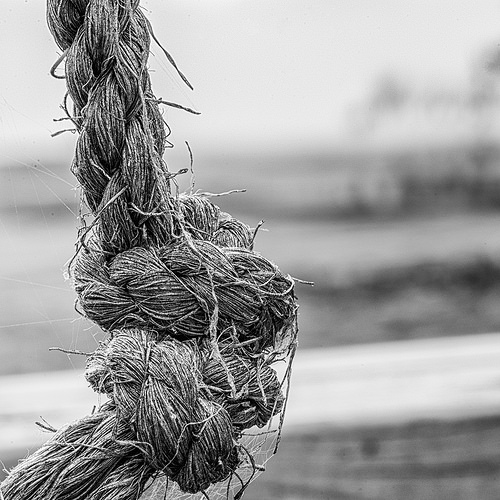
Frayed

Fayed

Frayed … I feel a little unraveled this time of the year. The crunch of getting things done before the last day of school. The never-ending list of must do items before we smash several get-togethers with family and friends. The packing before leaving for a vacation. The lack of sleep. The … well, the everything.

Our students are frayed. Teachers demanding their assignments. Parents rushing them around. Realizing they might not see good friends for two weeks. Having the pressure to be perfect at family get-togethers. Knowing the safety of school will not be there for the next two weeks.

Our families and colleagues are frayed. Most likely everyone we have recently seen or will see in the next few weeks are feeling the stress we impose upon ourselves this time of year. Holiday stress is so real that the Mayo-Clinic has a page on its website dedicated to coping with stress and depression.   

We cannot expect to be perfect during this time of the year, but many of us expend a great deal of energy trying to be or pretending to be. This includes the time we should be relaxing, away from the day-to-day time spent with our students. We don’t always need to feel like we are doing everything we possibly can. I need to remind myself frequently during the Holiday Season to take the time to refresh myself. I want to return to school excited to be back with my community of learners. I don’t want to return to classes of 25-29 students feeling like I need a vacation to recover from a vacation.

Over the last few years I have, rather secretly, only had three goals over the Holiday Break.

  1. Read a book that has nothing to do with school. This year I am planning to read The Underground Railroad by Colson Whitehead (which I received last for Christmas. ugh).
  2. Sleep at least eight hours each night. This may not happen, but it needs to happen. I think I’ve had one night in the last month that I slept more than seven hours. Most nights it is less than six hours. The lack of sleep is a constant for me during the school year, but it doesn’t need to happen during a break.
  3. Practice gratitude. I think I do practice gratitude regularly, but I am forgetful during the busyness of this season. Since I know I am happier when I share my thankfulness toward others, I will do something to show my thankfulness each day.

I know I have to do so much more than these three things before I return to school in January, but most everything else can wait. If I don’t read the numerous books I hope to read, then I don’t. If I don’t finish pre-planning the next writing unit, then I don’t. If I don’t go to every event I want to attend then I don’t. None of those things will make me feel renewed at 8:18 am on January 3, 2018. However, I know reading a book just for me is a gift to myself. I know catching up on my sleep is a necessity for me and a gift to my family. And I know being thankful will make me a better person and remind the people I love the most that I am thankful they are in my life.

Our classroom communities need us to be the best version of ourselves when we return from a long break. We should return to school feeling put back together, not coming apart at the seams.
To start my practicing gratitude phase, I am publicly thanking Brian, Sarah, Jim, Lysey, Kevn, Jennifer, Angie, Scott, Lea, Mandy, Andrea and Aliza. You said yes to collaborating on this site and I am incredibly thankful you did. I have learned a great deal from all of you in just five months. I cannot wait to see what you do to challenge and affirm my thinking in the future. I am truly blessed to call you all mentors and friends. I wish sometime in the future we can all be at the same place at the same time. Let’s figure out a way to make that happen.

photo credit: greg.simenoff Knot- via photopin (license)

Our Reading Lives

“[Kids] don’t remember what you try to teach them. They remember what you are.”

~Jim Henson

As a teacher it’s always been my hope that my students leave my classroom as readers. They may not remember everything we learn about Romeo and Juliet or Twelve Angry Men, but I hope they remember the books they chose to read in class, my excitement about reading, and our classroom reading community. I hope they remember that I care about them.

FullSizeRenderFor six or more years now I’ve been posting covers of the books I read on my classroom door for students and staff to see. It encourages others to read, promotes conversation, and also helps me keep track of what I’m reading (and where I need to fill in genre holes). My students see me reading during SSR and I think it’s beneficial for them to see my reading life as a whole via the covers on my door. They also notice how quickly I’m reading (or not reading).

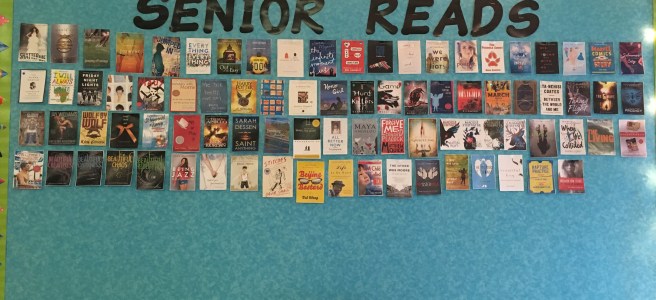
In the past I’ve saved a bulletin board for my seniors to post recommendations for the classes following them. Unfortunately none of my seniors last year participated, so I was left with an empty board this year. After some careful consideration, I decided to dedicate my two bulletin boards to my freshmen and my seniors’ reading lives. It’s fun to create Pinterest-worthy bulletin boards, but 1. I’m not that artsy and 2. I want my students to have ownership in my classroom. So these bulletin boards aren’t “artsy” by any means, but they are effective, which is the whole reason for bulletin boards in the first place.

My classroom now has a space for me, my freshmen classes, and my senior classes to post covers of the books we’ve read. I wasn’t sure what my students would really think of the idea, but they jumped right on board. It’s also prompted some healthy peer pressure between the grade levels. In fact, I just updated my senior board and I heard one of my seniors whisper “Bring it, freshmen!” to another student. Little did he know that I have yet to update my freshmen board! My last group of freshmen walked into class and noticed the updated senior board as well. “I thought we’ve read more than that! They’re ahead by a whole line!” They’re paying attention and the bulletin boards haven’t become “wallpaper” like so many pieces of classroom decor can become.

Since beginning this process, I’ve noticed students looking to the boards to see what everyone has been reading and then asking about specific books they see. It’s also been a great way for me to see the trends in their reading. When a student reads a book that has already been posted, I place a star sticker on the cover. Some books–my book club books in particular–are going to end up swamped with stars! I’ve also been playing around with the idea of including student reviews with the covers as well, but for the sake of space, I’m not sure if that will work. At this point, we may end up posting book covers around the outside of the boards!

The organization has been tricky. I try to carve out time each week to ask my students which books they’ve finished and add it to the list I have for each class. I also have to make time during my planning to insert book cover images onto Google Slides and then ask our media center assistant to print the covers in color. That also means making time to cut out each cover and staple it to the board. It’s an ongoing and somewhat time consuming project, but it’s worthy of my time. I plan on surveying my students at the end of the school year to find out what they think of it and if they think it’s a project I should continue.

I was disappointed when my seniors last year didn’t participate in my former bulletin board practice, but I’m ultimately thankful for it now. This new idea has been much more interactive and successful than any other bulletin board I’ve created. I hope my students continue to enjoy it.

Pushing The Reset Button

A few years ago, it was pretty common to find me pecking at my iPhone playing the game Angry Birds. For some reason, this game had me hooked. As you probably know, Angry Birds is a mobile game where you launch a set of birds from a slingshot and destroy pigs and structures made of rocks. At the end of each level, you can earn up to three stars based on the number of points. Always wanting to improve my Angry Birds proficiency, if I knew that I wasn’t going to earn all three stars at the end of the level, I would quickly stop the level and try again. Essentially, I was pushing the reset button, all the while saving my progress and points I’ve earned so far.
counter-949233_640Each year, I find that winter break is the time when I start to get a bit restless. It’s the half-way point of the school year and a wonderful opportunity for our classroom communities to get together and reflect on all we’ve accomplished.  It’s also a time when we can push that reset button and strategize how we want to move forward.

This week, I asked my students to reflect on the school year and what we have accomplished together so far. I asked them to think of our school year as a video game with winter break being a sign that we’ve made it to a certain checkpoint. We can’t go back to the beginning of the game, but we can start a new level with new strategies and mindset. To start our conversation, I asked students to take a few moments to consider these three questions: What have been the most positive parts of our classroom community that are working well? What parts would you like to change? How do you want to change them?

One idea that has always stuck with me is “how we look back affects how we look forward.” The manner in which we reflect and give feedback will influence how we utilize that feedback and take our next steps. With this idea in mind, I introduced an evaluation tool called a Plus/Delta Chart to help facilitate our discussion.  It’s a simple tool that helps provide continuous improvement for a group or team. I explained that the pluses are working well and what we want to maintain and build upon.  The deltas are opportunities for improvement. These are the things that can be changed so that our classroom culture can become stronger and more effective. The third column is for our prescriptions. This column is where we collectively come up with action steps to change, or cure, our deltas.

After about 10 moments of quiet reflection, we gathered on the carpet to share our thinking. I was anxious to hear what feedback they would offer. I hoped that this would be productive and not a place to complain and criticize.  As the kids talked, I recorded their thoughts. You can see our pluses and deltas below. ** I intended to complete the chart in one day; however due to time constraints, I saved the prescription column for the next day. I feel the prescription column is a vital part of this process, and should not be cut short. I chose to postpone the discussion until the next day since we were running short on time.

IMG_0134
When I zoom out and look at our pluses and deltas, there are a few things that caught my eye.  Many of the pluses come from parts of the day when students have choice–soft starts, writing workshop, book clubs and flexible seating options.  Also, I was intrigued to see that they liked when I stand at the classroom door in the morning. Further evidence that small gestures and simple acts of kindness can be crucial to a strong classroom culture.

When scanning the deltas, it seems like students are very interested in holding each other accountable particularly when it comes to their behavior. I’m thankful for those students who were brave enough to point out these concerns. My hope is that together, we can work through these concerns and strengthen our culture where everyone feels physically and emotionally safe. Without this feedback, this problem could have grown into a larger issue. I am excited to continue this discussion and collectively develop some prescriptions to help cure our deltas.

The first half of the school year can often feel like we are one of those Angry Birds being hurdled through the air at a breakneck pace. Using this winter break as an opportunity to regroup, reorganize and reset has been a healthy step in making sure everyone in our classroom community is heard. This “pushing reset” conversation, aided by the Plus/Delta chart, helped us learn from past mistakes, yet carry optimism into the future.

Acts of Grace and Confidence

unnamed

On the first day of school, I met my student Hiba.  As she stood in our classroom doorway, her first contact with me was a warm, firm hug with the words:

I am Hiba.  Good morning.

Gazing at her, I observed a happy girl wearing a colorful sundress, a beautiful hair bow and the cutest of sandals.  Behind this student’s  big smile and sparkling eyes, was a story, one of grace and confidence. 

“Welcome to our classroom. We are so happy that you are here. ” I replied

I only knew bits and pieces of her story.  Hiba arrived at our school the year before as a  9 year old.  Chronologically, she was old enough for fourth grade, but due to circumstances beyond her control, she was assigned to third grade.  Her placement was not based on language; our school often enrolls children speaking limited or no English.  Hiba’s situation was different; her family fled their home country of Syria when Hiba was a very young child and had lived as refugees for years in Turkey.  Interrupted schooling was an understatement.  Hiba had never been to a formal school and spent her early years folding clothing in a garment factory next to her seamstress mother.   

Regardless of past challenges, Hiba now had a chance to write a new chapter in her story.  She spent her third grade year in our school community  thriving and growing with the support of a loving classroom and caring adults. Hiba was like a very young plant her first year in the United States.  Like a seed, she was absorbing important elements like the culture of school and life in the United States.  As a seedling, she was building the basic language skills that connected her to a new community.  She empowered herself with an understanding school culture.  She made friends, while building her knowledge of life in the United States.  During her third grade year, a team of teachers collaborated with time and care,  helping Hiba build her identity as a reader, writer, and speaker of English. Hiba may have arrived in 4th grade with the label of “pre-functional,” a language learner with a limited English vocabulary, but she came with the confidence and optimistic energy of a student who was ready to work and ready to grow.


My Mission?  Better Yet…Our Mission:

I quickly understood that I could not best serve this child on my own.  I do not speak, read, or write Arabic.  How could I provide experiences for this motivated child and make up for time lost to war, relocation and interrupted schooling?  The task felt daunting and I knew I needed to find a way to move from worry to ease.  Foundational questions helped me discover our collective strengths so both Hiba and I could begin our work together from a place of ease and confidence.  I launched our year together asking:

  • How can my language arts classroom help this child grow?
  • What skills and strengths does this child bring to the classroom?  
  • Who is available to help support this child?

Just like most schools, our ELL teachers and aides have schedules that are stretched in mind-boggling directions.  With great care, the team and I collaborated and  secured a schedule, developing an intentional plan to maximize the talents of our support staff.  Our ELL teacher would provide daily intensive reading support, focusing on reading strategies and vocabulary instruction based on Hiba’s identified strengths and needs. Our bilingual aide would support Hiba’s knowledge of sight words and English vocabulary during writing workshop 3 times a week. With their support steps in place, I planned my role.


My Role:

As Hiba’s classroom teacher, I knew I was responsible for her mainline instruction in language arts, so I prepared my own action plan.  Using Marie Clay’s Observation Survey to gather literacy information about Hiba, I came to know her as a reader and writer during the first weeks of school.  I determined the kinds of sight words, functional words, and cultural vocabulary that would support her literacy development.  

  • During our Reading Workshop, I scheduled a guided reading lesson four days a week with one day to assess her progress, listen to Hiba read a self-selected book, and help her continue to build her own book collection with titles.  
  • I planned daily guided writing lessons for Hiba and other striving writers during Writing Workshop.  I could work closely and support Hiba and a small group of writers showing Hiba that she was not the only one working to become a better writer.  My striving writers learned that they could be teachers and help one another grow in the smaller circle of our guided writing group.  
  • For Word Study, I wanted her to experience our Word Study lessons, but I knew she needed more.  I secured a Rosetta-Stone online account for Hiba to use as an independent study tool to support her English and to enrich her Word Study experiences.

During the first weeks of school, I got to know Hiba just like any other student through “kid-watching” and anecdotal notes.  I watched her handle books and noticed she eagerly asked others to read aloud to her.  I noticed she loved to write and draw elaborate pictures to support her work in her Writer’s Notebook.  She absolutely adored her circle of friends, sweet girls that rallied around Hiba and helped her in any way possible.  Just like a pride of mamma lionesses, each girl took turns making sure that Hiba was happy, included, and successful.  I watched them patiently take time to understand her attempts to be part of conversations at lunch, lessons and workshop experiences.

Hiba demonstrated from Day 1 that she was always observing her classmates, listening to the conversations, and following their actions so she could be an active part of the community. I needed students to authentically enrich Hiba’s learning in a respectful and efficient way by harnessing the social power of our community.

Environment:  I began building supports into the learning environment so that Hiba was guided toward independence.  

  • Seating:  A caring team of friends agreed to sit with Hiba at a table so they could provide support as needed.  I met with the girls and modeled ways to support rather than just “doing” for Hiba.  Their job was to let her be independent and only offer help as requested by Hiba, offering assistance in a kind and respectful manner.
  • Quick Communication Board:  Hiba had access to a clipboard with icons and survival phrases that were presented and explained to her by our Arabic-speaking bilingual aide.  The Quick Communication Board helped Hiba to have dignity and independence when asking for help.  As she felt comfortable with phrases like, “I need to sharpen my pencil”  or “I need to visit the restroom,” new phrases replaced mastered life skills.
  • A Visual Schedule:  Consistency and predictability help children gain control over their lives as they navigate a sea of new language and culture.  Knowing what was going to happen throughout her day helped Hiba to feel secure so her energy was focused on learning.  A buddy or the bilingual aide reviewed our schedule at the start of each day so she knew what was happening at all times.


Workshop Supports:

I looked for intentional ways to capitalize on dignified peer support to help Hiba move towards independence during our literacy workshops.  Thinking about our 3 literacy blocks, I targeted ways that students could enrich Hiba’s membership in our literacy community.

Reading Workshop:  

During Reading Workshop, the freedom to make choices are important to all children, including ELL students.  By adjusting workshop experiences to match Hiba’s growing confidence and skill-set, we launched the year with Book Buddies supporting Hiba in various ways during independent reading time.

  • A Book Buddy listened to Hiba read books from her leveled book tub.
  • Another Book Buddy read a picture book selected by Hiba. The reader not only practiced reading aloud for meaning and fluency, but Hiba grew her reading life and English knowledge with picture books.
  • Audio Books on sources like Epic gave Hiba other independent reading options.
  • Wordless Books were always available for Hiba to read by herself or with others during independent reading time.  The powerful illustrations of these books were later used for vocabulary development during Word Study or 1:1 sessions with an adult.  

Writing Workshop

Hiba met each day for a focused guided writing lesson with me. During Independent Writing Time, Writing Buddies helped Hiba capitalize on labeled visuals.

  • Labeled Pictures:  Hiba would select an image with vocabulary labels to support her writing.  As she crafted a sentence, a writing buddy could read or listen to Hiba and offer support as needed.
  • Visual Dictionary: Peers could target a page in a Visual Dictionary so that Hiba was comfortable using this writing tool to find the words she needed for writing. Students were encouraged to add synonyms to useful pictures.  For example:  on a page with art supplies, a peer added the word “markers” to a caption that read “felt tip markers.”
  • Tech Support:  As Hiba learned to use Google writing tools, spellcheck became an empowering way for her to move closer to conventional spelling.  Those “red squiggles” on misspelled words allowed her to control how she asked for help or corrected words by herself.

Word Study

  • A Word Buddy helped Hiba review vocabulary in her picture dictionary.
  • A Word Buddy listened to her complete Rosetta-Stone lessons so she had an audience for the speaking components.
  • A Word Buddy also served as a vocabulary tour guide around the classroom, checking her understanding of functional life vocabulary cards taped around the classroom.

Lessons Learned

It is natural for classroom teachers to scramble, searching for ways to support and enrich the learning lives of ELL students.  By nature, teachers are experts at designing and controlling experiences for students that lead to positive outcomes.  The lesson I learned from Hiba was one of grace and confidence.  I discovered it was not necessary for me to be the sole provider of her learning experiences.  Rather than looking at a pre-functional student as a daunting challenge for a classroom teacher working alone, support is available when a teacher looks to the strengths of a child and accepts the help of the community.  

With intentional planning, the people in Hiba’s learning community coordinate and maximize learning opportunities.  Teachers and students help Hiba navigate a new language and culture each day in our own way.  As teachers, we cannot control a child’s past experiences or a child’s present level of English language skills.  What we can control is how we respond to this learner.   When we respond with dignity, optimism and the strengths of our community, we find unlimited unlimited powers and opportunities.

Listen, Intentionally

Screen Shot 2017-12-06 at 9.39.26 PM

A few days after our Thanksgiving break during writing workshop I noticed the frustration on the face of one of my seventh grade writers as she stared intently at her computer screen. As I walked over to her, I began to plan what I was going to say to her as we began what I hoped would be a very quick conference.

My list of “Must Check-in With” kids was large and the deadline for the project was looming and this student is one of the strongest writers in my room. I did not think I had the time to sit with her. To be honest, I didn’t even want to sit with her. I just want to say as I walked by her table, “How is going?” followed by a “I am sure you will figure it out, let’s meet later in the week, but I need to check in with Josh right now.” The quick fly-by conference did not happen.

“Hey, how’s it going?” I asked as I was already moving past her table.

“I hate this narrative, there is no plot, it is pointless. It is crap and I don’t know what to do!!”

Stopping immediately, I looked at her, really looked at her, and when I saw the vulnerability of her expression, I knew Josh could wait. Her frustration was way beyond what I expected. She was well past the stage of “productive struggle”, “growth mindset”, “grit”,  “perseverance” or whatever phrase we might use to push kids to the ‘next level.’ This girl probably didn’t need any writing instruction. At this moment she needed someone to listen and someone to remind her that writing, like life isn’t always perfect.

I grabbed a nearby stool and sat down next to her.

“OK, do you want me to look at the part that is frustrating you?”

“It is all frustrating!! I can’t figure out what how to fix it, it is due in three days.”

“Well, I know that sometimes having someone else give you feedback is helpful to me. I often think my writing is bad, but usually somebody else can see the good in it. Can I look for some good?”

“Sure, but there really isn’t any good, my partner (feedback partners are an integral part of our writing workshop) keeps telling me my description is great but, there is no plot. How can fix ‘no plot’ when my short story is already six pages long?”

I let that comment linger for a few seconds. There were many paths I could have taken, but I went with the idea of reading a little bit of the story with her and hopefully finding a way to nudge her off the idea that her writing is awful.

“So, maybe we can’t find a way for you to revise this story, but I think it is worth shot. You have put too much effort into this piece of writing to dismiss it completely. Do you want me to read it over? Would you like me to suggest some things that might help you?

“Sure, I guess.”

Over the next seven to eight minutes I read over about a page and a half of her writing and we talked a great deal about the story. I really did not give her any writing tips, I affirmed her writing skill and shared some of my thinking about why her ‘bad’ writing had a tremendous amount of very strong writing. There were parts to her narrative that were almost lyrical.

At that moment in time, she didn’t need her writing fixed, she needed someone to listen to frustration. She needed someone to appreciate she was frustrated. She needed someone to remind her realize that it is ok to not have a ‘perfect’ product.

The students we work with come from a variety of lives. Their worlds outside of school are vastly different. The kids in my school may have different struggles than the kids in your school. But, they all have some struggle in their story. I also think our kids have many things in common. One thing that I believe they have in common is the need to have someone actually listen to them. Authentically and empathetically listen to them. We all need someone to be willing to see us for who we are and to accept that what we have to offer is enough.

There are times in our classrooms that we are pushing so hard because we have so many things to accomplish in such little time. I get wrapped up in this as well, but I work hard to create time and space to just listen to my students when they need someone to just be there for them.


Not-So-Happy Holidays

Last year I had Christmas dinner alone. I had planned to eat Christmas dinner with my mom, but she woke up with the flu that morning.

I’m a teacher. I definitely didn’t want the flu over winter vacation. I took her some meds and got out of there as quickly as possible.

I briefly felt sorry for myself. Everyone else already had plans or was out of town. I didn’t even know what to feed myself for dinner.

After about a minute, I remembered a recipe that I’d seen online that I wanted to make. I remembered that the Safeway near my mom’s house was open on Christmas Day. I remembered that I’m an introvert. Christmas dinner alone was not a big deal.

I think that sometimes when we think about the holidays, we think that the worst that can happen is that someone won’t have many family and friends around. We warn children to remember that their classmates might not get as many presents as they do. We get caught up in “Merry Christmas” or “Happy Holidays” and which songs are okay for the winter concert.

For many of our students, the holidays aren’t the happiest time of the year. For some, they’re the worst.

It’s not just about being sensitive because someone else might have less money. It’s not just about keeping church and state separate.

We have students who don’t live with their parents for good reason, but might have to see them at a holiday gathering. We have students whose families will drink far too much at their celebrations. We have students with parents incarcerated, or serving overseas, or lost to addiction, or just gone. Our LGBT students might have to hide their true selves around their families. Our student might be giving their meals to a younger sibling because there isn’t enough to eat, or sleeping on the floor in that sibling’s bedroom to keep them safe during a holiday party. They might be hiding bruises from extended family to protect their abusers.

I’ve written before that we don’t actually have to know our students’ stories to help them. They don’t have to reveal their secrets to us.

Instead, we need to remember that all of our students have stories, and treat them as such. Assume that holidays are hard and make your classroom a place of safety and predictability. Don’t add more stress to their lives.

It’s a busy time of year. As teachers, we’re trying to cram a unit in between two holidays. We don’t want to leave something unfinished over a two-week vacation. High school teachers know that the end of the semester is coming.

Stop. Slow down. Connect. Take the extra ten seconds to ask a student how it’s going. Take another ten seconds to ask the next student how it’s going.

I set three goals for December this year: relationships, engaged reading, and strategies for rigorous texts. Will it be better if we finish the whole book before vacation? Sure, but there’s a reason that I put relationships first on that list. The needs of the student are more important than my need to finish the chapter.

Our students won’t come and tell us that the holidays are hard. Some won’t even know it themselves. But we know, and so we must be extra kind and safe and predictable and wise.

Take a deep breath.

Take another one.

You got this.

More than Nothing

On Saturday, November 18, I had the pleasure of delivering an Ignite talk at NCTE. The following is a modified version of that (with a few extras thrown in as this blog does not come with the same constraints as a 5-minute Ignite talk!).

Before you begin reading the rest of this post, do me a favor. If there’s someone nearby, go to them, smile, and ask them how their day is going. Or tell them you’re glad to see them today. Or give them a small compliment. Or just say hi. If you’re not near anyone, pick up your phone and text someone something nice. I’ll wait.

Did you do it? If yes, continue. If no: I’m serious! Go do the thing. Then continue below.

Okay.

So.

How do you feel? I’m guessing that you feel just ever-so-slightly better than you did a moment ago. Nothing world-changing. Perhaps a similar feeling to a nice sip of a warm coffee or tea. Nothing to write home about, but certainly no worse than you felt before. And there’s a good chance that you feel just a little more connected to the world around you, and just a little better about the day.

But this post does not exist to make you feel good. Frankly, I don’t really care about making you feel good. I mean, I do, but there’s a good chance that, if you’re reading this, you’re an adult. You have ways to manage your own moods and temperaments. You might be reading this blog post for that very reason, as it tends to be a pretty positive place. But if you’re a teacher, you’re probably here for your students. So take a moment, and think about the student who has no choice but to be in your classroom. If you can, think of someone who hasn’t said a word — not a single word! — to you yet this year. I think there are more students like that out there than we may admit or realize.

I posit that having the sorts of brief, positive interactions you just had at the start of this post with your students is beneficial to both you and your students. But that’s sort of obvious, I think. Being kind and positive to your students is good for them? Super ground-breaking news, I know. But the key is it can’t just be once. Or twice. Or when you’re in a good mood. Or when they’re in a good mood.

It has to be every. Single. Day. You have to be hard to ignore. Because if I’m a student, and I want to shut down, I can do that so easily. All I have to do is nothing. Nothing is often the easiest thing to do. It’s simple to default to nothing. It’s easy to make myself invisible. To make myself nothing.

We know this isn’t good! Being nothing, as it turns out, is very bad. And if a student acts like they’re nothing, they will begin to feel — or perhaps already do feel — like they are nothing. And if they feel like they are nothing, then we have failed them, because each and every child who comes into our classroom is someone who has worth. Every child — even if they’re only there for one day — has value. Every child is deserving of celebration and deserving of love.

So you can’t be easy to ignore. Imagine you decide, for example, that you are going to greet every student at the door when they arrive to your room. And you do this for 3 or 4 days, but on the fifth day, your principal is talking with you, and on the sixth day, you’re just not feeling too good because it’s Monday, and on the seventh day you’re there again, but on the eighth day, you just have too much to prepare for the students inside the room that you can’t be at the door, and the ninth day, you stop greeting your students at the door because it’s a lot of work.

Well, guess what? It’s really easy to be a nothing student with a teacher who does that. The first few days, I can just give you the cold shoulder and take my seat. And then there were a couple days where I thought you stopped trying to greet me, so it was easier for me to be nothing. And then there was another day of it, and I thought “oh geez, she’s trying it again,” and then you stopped, and I went on being nothing. And I learned nothing except how to feel like nothing.

The students who think they are nothing need you to show them they are something Every. Single. Day. Because it’s easy to ignore the idea that I am something when I am not confronted by it. But it becomes really hard to continue on the path of believing I am nothing when I have someone who says hi to me every day, with my name, and they are smiling at me, and they say my hair looks nice, and I guess it does, but I walk past them because I don’t care and I don’t want them to care but they say hi to me with my name and a smile every day, asking about me as a person, not just me as a student, and they’ve been doing this for 3 months straight, and don’t they understand that I’m nothing?

Or maybe they know something I don’t. Maybe I’m not nothing. Maybe the reason they say hi to me is because I’m worth saying hi to. Maybe the reason they say they’re glad I’m here is because they’re glad I’m here. Maybe they want me here. Maybe I’m wanted. But who wants nothing? How can I be wanted and be nothing?

Maybe I’m not nothing. I’m not nothing. I’m something. I’m someone. I’m someone, and I’m wanted.

I believe that there is not a teacher out there who wants any of their students to feel like they are nothing. Guess what? YOU have the power to make every single student feel like they are someone. Let me repeat that. You have the power to make every single student feel like they are someone. Feel free to read that again and again until you understand it.

Do you know why you have that power? Because you’re the adult. You chose this profession. You chose to accept the job you’re in. You get to make these sorts of large-scale choices. The student doesn’t get to choose whether or not to come to school. They usually don’t get to choose their teachers. Their choices are limited. They can choose to act like they are nothing.

Also as an adult, you have the emotional maturity to act in ways you might not want to because you know it’s for the betterment of yourself and others. So you are the one who has to make the choice to say hello outside your door, with a smile, every day for 5 months straight to someone who acts like they are nothing and like you are nothing. Your degree is a contract that you will outwait your students. You will treat them like a person longer than they will treat you like not a person.

We have to do this. We have to do this because people who think they are nothing don’t graduate high school. People who don’t graduate high school are three times more likely to be unemployed than those who do. 80% of the incarcerated population in the US are high school dropouts. 70% of African-American males who don’t graduate high school are imprisoned by the time they are 30. We have to do this work.

And we’ve gotta love them all. We have to love the ones that are going to end up in prison, and the ones who love Drake as much as we do. We have to love the students who fail our courses as much as we do the ones who do the extra credit they don’t need because they just love our class that much. We have to love the ones who treat us like garbage as much as we do the ones who pick up the garbage in our classroom because they want to be nice. We MUST make sure EVERYONE who comes into our rooms knows they matter.

Because the student who thinks they’re a nobody? They drop out. And things are not great for those without high school diplomas in our current society. There aren’t the farming or factory jobs there used to be. Minimum wage isn’t enough to survive on, if they can even find those jobs. What often is available and provides enough income to survive on is illegal. There are things we need to address as a society, but we need to focus on what we can do with the students right in front of us.

Because those students who think they’re somebody? They try. They often don’t drop out. It might be hard. It might take them 3, 4, 5 dozen times before they really understand the concept. But if there’s someone who believes in them, they will do it.

So we have to be those people. We have to believe in them. If not us, who? If not now, when? Your students need you, the very day you arrive back in the classroom, to tell them you’re glad they’re there, as Pernille Ripp does with the sign outside her classroom (click the image for her blog post about this sign).

Image via Pernille RippI cannot think of better words to add to that sign, but I will just say this: remember who is more important in the student-teacher relationship. It’s not the person with the name on the door and the degree on the wall. It’s the child whose creations are the reason you ran out of wall space and took your degree down to make room.

Because if you ask yourself who matters more in the student-teacher relationship and the answer is “I matter more than my students,” you will not change the lives of anyone in your care. You are the professional. You are the adult, and they are the still maturing human. For the hours they are in our care, they matter more than us. Their feelings matter more. And it is important they know they matter.

All of our students matter. Every single one — even the one who has only shown up to class 3 times this year. Even the one who might only set foot in your room once. Even the one who would sooner spit in your face than ask or answer a question. Every single student matters. It’s imperative that we help them see that in themselves. Every single day. Until each of them know they are more than nothing.

Building Relationships in the Wilderness

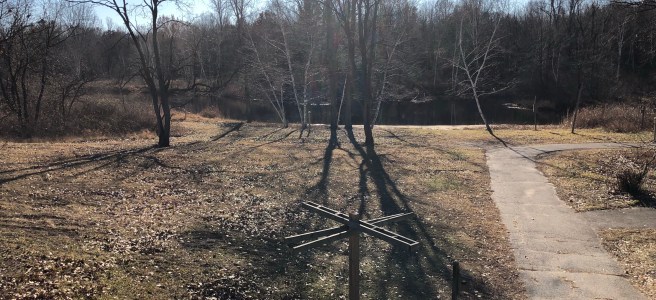
This is my view from work today.

img_0180

It’s incredible, awe-inspiring, and beautiful.  Hartley Outdoor Education Center sits on 300 acres of hardwood forest.  It includes a pond, wetlands, historic coal mine, several original log cabins, and the Fowler one-room school house.  It is an educational staple in the Great Lakes Bay area in Michigan.  The three day, two night trip our fourth graders take every year is one of the most memorable experiences of their lives.  I don’t remember much about my own time in elementary school, but 28 years later I still remember every detail about Hartley.  I am fortunate that I am able to return every year with our fourth graders.  Hartley is so much more than just a nature center. It is an experience. It is an opportunity to truly get to know the students in your building in a way only an overnight trip can provide.  Hartley is the trip that turns your class into your family.

It starts with teamwork and collaboration.  The Confidence Course is one of four sessions that the students complete during their time at Hartley.  The students have to work together to complete a maze while blindfolded, build a log cabin with timbers, cross a moat on a rope swing, and find a way over a ten foot wall.  Regardless of how athletic or smart you are, these tasks cannot be completed without teamwork.  It never fails.  The students always struggle at first.  They struggle to listen to each other.  They struggle to take turns.  They struggle to get past the first obstacle.  Just when they seem to be at their breaking point, they come together.  The listen to each other.  They divide the tasks and share responsibilities.  They complete obstacle after obstacle TOGETHER.  You can almost see them becoming more kind and more empathetic right before your eyes.  Although the tasks are hard, they make success even that much sweeter.

One of my favorite things to do at Hartley is watch the students during free time after the confidence course.  They are not in their “normal” friend groups.  Everyone is talking to everyone.  Everyone is playing with everyone.  The relationship between the students has changed.  They are not classmates anymore.  They are family.  They forget about who is a rock star in math and who is the best soccer player.  It doesn’t matter who has the coolest clothes or the biggest house.  These people are your friends because they helped you across the moat, they encouraged you to swing when you were too scared to let your tiptoes leave the plank, and they believed in you and supported you.  These new qualities are so much more important than any of the previous status symbols.

Another session at Hartley is the outdoor survival course.  This course is built around the book Hatchet by Gary Paulsen.  Hatchet is one of my personal all time favorite books.  I read it when I did my student teaching in 4th grade, and it was the book that turned me into an avid reader.  The students, just like Brian in the book, have to learn to survive in the outdoors.  They build a shelter, start a fire, and devise strategies for finding food.  

Students spend almost the entire three days at Hartley outdoors.  They learn to appreciate nature and embrace its beauty.  Hartley is more than just an outdoor experience for students.  It is the first step towards independence for most students.  

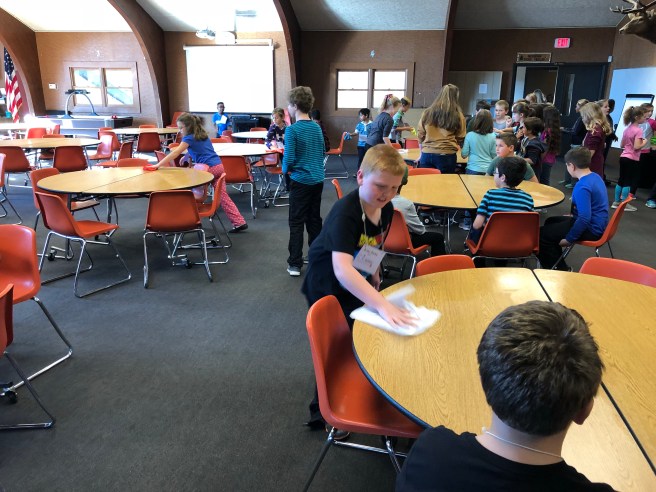
For many students, Hartley is the first experience away from home without family. It’s the first time they are responsible for cleaning tables, serving food, and scrubbing the bathroom floor.  They gain a new appreciation for keeping the floor clean as they are responsible for vacuuming.  Hartley challenges students to be brave.  It challenges them to be problem-solvers, collaborators, and good teammates.  It scaffolds them toward independence.

img_0175

Hartley is an exhausting three day trip.  The fresh air tires you out and with 90 students in the dorms, you get very little sleep.  However, I wouldn’t trade the experience for anything.  I am so thankful I am able to attend this educational experience every year with my students.  This year in particular is truly special for me.  As I look out the window one more time, I see my son’s group approaching.  They are back from their trip to the confidence course.  I get a little teary eyed typing this because I know his time in elementary school is rapidly coming to an end.  He is not the scared kindergartener that grabbed my hand walking to the door.  He’s the young man that helped his team navigate through a maze while blindfolded.   He’s having the time of his life. Thank you, Hartley Outdoor Education Center, for providing him and countless other students memories that will last a lifetime.

I Am Thankful For You

Halfway through November, the leftover Halloween candy in the school office still tempted the staff as the realization set in that the holidays were approaching. Thoughts of report cards and running records, defrosting turkeys and holiday shopping ran through our minds simultaneously. Was it really time to plan for the last days of school before Thanksgiving break? How could it be? Didn’t the school year just begin?

Every morning, teachers hit the “go” button, jumping into the usual rush to
write the morning message
run one more copy
check out a library book
track down the tech guy
grade writing pieces
plug in the iPads
drop off papers with teammates
grab the mail
rehearse the day’s minilessons…
But on that Monday morning, our rush came to a stop.

That Monday morning, we arrived at school to learn that one of our middle school students had passed away over the weekend.

He had taken his own life.


Blank space. Because there are no words to adequately fill it.

We stopped. We listened to the news. We stood with our mouths agape, our eyes pooling with tears. He was a young man none of the elementary teachers knew, as he was new to the district this year. According to his mother, he had experienced bullying from a young age, but this loss was a shock to everyone.

As we absorbed the news and struggled to comprehend this horrific reality, there were only questions to fill the heavy silence.

How could this happen?
What will his teachers think?
How will his classmates handle the news?
What else could have been done?

That evening, on a group text with my third grade teammates, we asked each other those very questions. Desperately wanting to dissolve our feelings of helplessness and hopelessness, we asked ourselves a new question:

What can we do now?

Like dry kindling to a newly lit fire, ideas began to spark, bouncing back and forth, until we had a plan. Our response. Our refusal to let this tragedy be unanswered.

Grand scale change always starts with a small act, a kind word, a good idea. “This is what kindness does…Each little thing we do goes out, like a ripple, into the world,” the teacher in Jacqueline Woodson’s book Each Kindness tells her students. How many people have their day changed for the better by a smile, a compliment, a thoughtful word?

This got us thinking…how often our children are told to be grateful for things, yet how rare it is for them to hear that others, especially adults, are grateful for their existence.

Our big plan would be, in practice, a small gesture. A little kindness that we hoped would reverberate within each of our students, perhaps becoming infinitely meaningful to some. We wanted to let each of our children know that we are grateful for their existence.

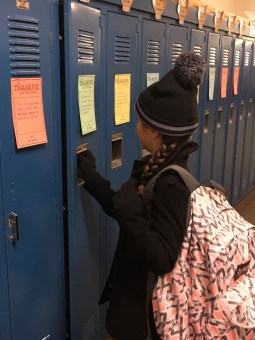
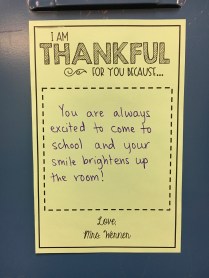
The last day of school before Thanksgiving break, before the children arrived, my team printed out a template that read: “I am THANKFUL for you because…” and wrote a personal note to each of our students. We admired their talents, highlighted their unique personalities, and encouraged them to shine. Like secret kindness ninjas, we hung each note on their lockers and waited for the buses to arrive.

One by one, our 8 and 9 year olds strolled down the hallway, catching glimpses of the notes, and rushing down to their own lockers to see what treasure awaited them.

One by one, they discovered their notes, and stood reading, backpacks dangling from their arms. What followed were
smiles
blushed cheeks
curiosity
amazement
second and third reads
“Thank you Mrs. Werner!”
squeals
hugs
gratitude
ripples of kindness.

At the end of the day, each student carefully peeled his or her note off the locker and took it home with them. I figured some of the notes would be waved excitedly in parents’ faces at home, others silently cherished and saved, and others soon to be lost or forgotten. But what mattered most was that each child got to experience a moment reading words that let them know that we, their teachers, are grateful for each and every one of them.

*****

Back to work Monday morning after a restful break, I leapt into the usual rush once again. Checking my email, I noticed a parent had written one over our break. It read:

“Thank you for your kind words that you wrote on A’s locker. He showed me the note and we proudly displayed it on our fridge.”

In the rush of preparing for a full, busy week, I took a moment to stop and be grateful that my words had a ripple effect on this student. Thanksgiving may have passed, but it is never too late to tell your students directly and sincerely how thankful you are for them. You can never know how deeply that may affect them. It just might send ripples straight through their hearts.

 IMG_3318 IMG_3315

IMG_3298 IMG_3291 IMG_3296

IMG_3311 IMG_3324

Stepping Back to Rebuild

The other day I tweeted about StoryCorps and how easy it is to capture relatives’ stories during the holidays. I still have the recording of my grandfather saved, where he recounts growing up in Fowlerville, Michigan, as an orphan.

And remembering this, made me remember the time that one of my Creative Writing classes was at war. Some students would frequently volunteer to share their writing after Sacred Writing Time, and a small faction of students began expressing their frustration at repeated topics. No matter how many times I assured that them it is okay to “write what we know,” the same small group of students would still mumble and disengage, subtracting from the safe environment that I had hoped to create. I knew that I had to repair the sense of community before we could move on, before we could share our StoryCorps recordings from the holiday season. If not, no student would be willing to take the risk necessary to put their families, their histories, their cultures and traditions on display.

I can’t remember what was said that day, but I remember the tears and shouting from students. Had I been observed, I am sure that from the outside my classroom management skills would have been considered incredibly weak. The classroom had reached a point so divided that I knew that what I had planned would never come to fruition if we did not address our sense of community.

So I stopped. The writing for that day? Moved. The mini lesson I had planned? Postponed. We needed to get to know each other even more. We needed to understand our similarities and our differences. We needed to focus on interacting as people before we could fully interact as writers.

So I used a tool that was shared with me by the Michigan Roundtable for Diversity and Inclusion. This “Cultural Sharing Sheet” became the foundation of our next few days, including an exploration of “Life’s Lessons,” the verbal and non-verbal lessons that were imparted to us about nationalities, genders, races, socio-economic status, and education levels.

It was awkwardly slow at first. I had to begin by sharing the messages that were shared with me growing up: Hard work is the solution for everything. You will go to college and be the first person in our family to graduate from a university. No one is better than anyone else.

As we went around the group, first sharing safer categories and then others not so safe, students began to see each other in a different light. While we are not inherently the beliefs that raised us, we are influenced by them. Sometimes we want to embrace them, and other times we need to actively work to distance ourselves from them.

I wish I could say that everyone got along from then on out, but that would be a lie. The tension dissipated, sure. There were still disagreements and misunderstandings. But when they did happen, everyone was a lot more willing to pause and think, recognizing that we aren’t necessarily the beliefs and actions of our families, but we are definitely shaped by them.