If-then

Screen Shot 2018-03-01 at 6.50.14 AM

Fill in the blanks:

If I didn’t have to ____________, then I ____________.

If my students were____________, then I ____________.

If my class size was____________, then I ____________.

If my salary was____________, then I ____________.

If I had more ____________, then I ____________.

If the parents ____________, then I _________.

If the standards ____________, then I _________.

If my room ____________, then I _________.

If my contract ____________, then I _________.

If the community ____________, then I _________.

If my colleagues ____________, then I _________.

If I had ____________, then I _________.

If the __________ teachers ____________, then I _________.

If my administrator ____________, then I _________.

If I could just remove ____________, then I _________.


Check yourself. How many of the if-then statements above we positive?  How many were negative?

Positive or negative answers to hypothetical statements don’t have much impact. But the way we frame our verbal and written language to our students, colleagues, families does have a huge impact.

I constantly am checking myself and my language. I make mistakes, but I work hard not to fall into the trap of ‘if-then’ negativity. And when I step into that trap, I feel the bite of its teeth. So I work to get out of it immediately.

Not One More

I am your child’s teacher.

I do not need

your thoughts and prayers

speeches about school shootings that do not once mention guns

a government that makes it easier for mentally ill individuals to purchase guns

congresspeople who place lobbyists’ wishes above those of their constituents

gun laws that ban assault weapons lapsing


another day of setting curriculum aside to address my students’ fears and questions

hashtag activism

to see one more child posting or tweeting about their slain classmates and family

to be told that today is not the day to talk about this

to look around my classroom, deciding which pieces of furniture make the best barricades and self-defense weapons

to train children how not to die at school

the solution to be that American teachers should now be armed.

We never have enough money to stock school libraries, retain full-time guidance counselors, buy supplies for art teachers, and update technology, but somehow we’re flush with the finances to buy every teacher in America a gun? I teach math, and that doesn’t add up.

I am your child’s teacher.

You want to arm me?

Arm me with books.
Arm me with winter coats.
Arm me with healthy lunches.
Arm me with a social-emotional curriculum.
Arm me with full-time support staff.
Arm me with time.

Because my arms were meant to
Hug children
Carry books
Paint watercolors
Create writing
Turn pages
Capture thinking
Open doors

They were not meant to
pull children into hiding
make bookshelves into barricades
soundlessly signal for silence
shield students from bullets

But, because
I am your child’s teacher
I would.

I am your child’s teacher.

And I am now required to
think
about
that.
Life and death…because I want to teach kids.

I am your child’s teacher.

I need you.

I need you to care enough about children to hold accountable those who refuse to act and who ignore the fact that we are the only economically advanced country where this happens REGULARLY.

Because thoughts and prayers do not stop bullets.

Because I’m tired of going to work every day wondering if today will be the day I’ll need to shelter my children in silence to survive.

Because schools should be the safest places in our communities.

Because every time this happens, shoulders are shrugged, and complicit helplessness thrives and asks us to accept this as normal.

This is not normal.

Take your thoughts and prayers and turn them into votes and action.

Thoughts and prayers vocalize our pain.
Votes and action catalyze our change.

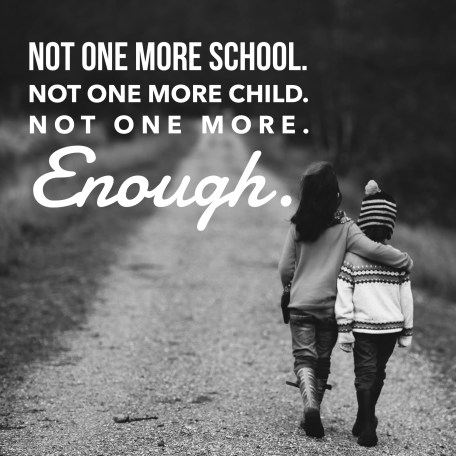
Not one more school.
Not one more child.
Not one more.

Enough.

This post adapts and expands upon an original post I shared on my personal social media accounts the day after the school shooting at Marjory Stoneman Douglas High School in Parkland, Florida in which 17 people, most of them children, were killed.

IMG_6241

The Courage to Teach

35167923250_2dba95e4d4

When I heard the news from the Parkland School Shooting last Wednesday afternoon, I was numb. I didn’t have much time to process due to the busyness of my schedule that day, I just felt an overwhelming sadness for the community that is and surrounds Marjory Stoneman Douglas High School. My wife, son and I had plans to go out to eat for Valentine’s Day after we all met at a doctor’s office to get an update on my son’s broken finger. As I rushed through my afternoon and early evening, I pushed down the sadness and anger because I wanted to just be with my family and appreciate the time we could spend together.

Finally reading the news about Parkland later that night horrified me. I put my phone down and ignored social media completely for a few days. I assumed Parkland dominated my feeds because about 90% of my online connections are teachers or news agencies. I needed time to think without the constant barrage of tweets, facebook posts, images, and articles.

When I felt I was ready to emerge from my cocoon of avoidance, one of the first things I saw was the video from a rally where a survivor passionately called for us to act. Emma Gonzalez shook me to the core.

Because I have lived a relatively comfortable life, it can be easy for me to look away and shield myself from the bad things because the bad things rarely happen to me. With the exception of cancer killing my first wife at the age of 33, just about all my bad things have been temporary setbacks at best. It took me two years to get a full-time teaching job, but I know plenty of teachers which that journey took far more time. I occasionally get into arguments with family, but who doesn’t? There are days that work frustrates, but if you are a teacher and haven’t been frustrated at some point then I may need to drink what you are drinking. My current struggle is dealing with a shoulder injury caused by a car accident this past summer. Which isn’t fun, but it is legitimately my first injury since high school. I have never been the victim of a crime, sexual harassment or racial profiling. Nor have I ever had to worry when I would eat next or stress about paying my rent or mortgage. I can afford numbness because while I work very hard at what I do, I have it very easy compared to at least 95% of the world.

I have watched Emma Gonzalez’s video several times. I get teary-eyed, I get angry, I worry about the safety of my son at his high school, my daughter at her college, my wife at her school (she is also a teacher) and I worry about my middle school. And I ask myself, why would any young person want to be a teacher? If the 20-year old Tony Keefer was an undergrad now I know he would have never considered going into education. He would have said, “Why would I want to go into a profession that is under attack – both literally and figuratively?”

If we want stronger communities in our schools, we need to become better at many things. One of the things I feel we need to do better is not hiding from the issues that can break down attempts to build strong communities. I know I need to be more visible and vocal about what I think needs to change. I need to be more like Emma Gonzalez.

When I started teaching, somebody gave me the book The Courage to Teach by Parker Palmer. It was one of the first books that inspired me to connect more with my students. When I leafed through it while trying to write this post, I came across this, “The personal can never be divorced from the professional. “We teach who we are” in times of darkness as well as light.”

Sadly, as I write this post, it is yet another time of darkness. Back in the front of my brain is the disbelief of how we, myself included, have become observers in a dystopia that sends ‘thoughts and prayers’ after a mass shooting, but can’t figure out how to take action. I am not sure if I completely know what I will do differently yet, but I am not hiding anymore. The professional in me will make things more personal. And I won’t keep my personal thoughts to myself anymore.

photo credit: arjan.jongkees Broken Hearts and Broken Promises via photopin (license)

“Please don’t give up on me.”

There are a couple of kids each week that I check in with on Monday, set weekly goals, and then follow up with on Friday afternoon. I try to vary the hours in which I call them down so they don’t miss even more class than they already do. I have one young man whose goal is strictly attendance. We are still trying to make it to every class, every day. Sometimes I call in to his classes; other times I simply walk by his classroom and wave at him just to make sure. Another’s goal is to focus on just one class. She can get overwhelmed and her transcript shows that she hasn’t passed a class yet. For another young man, we are working on developing necessary “soft skills” of making to-do lists, setting deadlines, and following through with actually turning in the work. This all came about after I learned he does many of his assignments, but they rarely make it in for credit.

But I’ve been thinking a lot more about how I approach these students, especially after my Wednesday afternoon. On Wednesday, a student was taken to the hospital. Whenever we cannot get a hold of parents or they cannot be there in a reasonable amount of time, an administrator goes with the student. Thankfully this post is not about that student. He’s fine. Mom and dad eventually arrived. There was no major concern.

But this post is about other students. As I sat in the emergency room waiting area for the student to be checked in, I overheard, “There’s Mr. English,” whispered behind me. I turned around and I saw a student I didn’t know by name, sitting there with who I assumed to be his grandfather. I nodded and smiled, but I didn’t say anything. I wanted to protect his privacy and not intrude.

As I kept waiting, another student walked in with her mother. We smiled and nodded, but we didn’t have to say anything. Her mother was in pain. That was her focus. They, too, sat down, and began waiting to be called back.

I was at the hospital for over an hour and a half. The student I was with had arrived by ambulance and was seen quickly. These other students had arrived by car or by bus. They were still waiting when I had left.  This is not commentary on the process of the hospital for choosing which individuals to see first. I have mad respect for healthcare workers.

This is, however, a reflection on what I noticed in these students the very next day when I saw them in school. I called one of them over during passing time, and whispered, “Is everything all right?” He kindly shared that it was a “late night.” I patted him on the back, reminding him that I was glad he was at school. “Yeah, but I didn’t get all of my homework done.”

I encouraged him to talk with his teachers about what had happened, where he had been, how he was trying to offer comfort and support to a loved one that was in considerable pain. He nodded, but I also respected his request to not tell anyone about his “personal business.” Growing up and having spent countless nights in the hospital with my own mother, I understood completely.

So I write all of this because I’m thinking a lot more about the time when we don’t see students. When they’re at the hospital with a loved one in pain, or they are taking care of their younger siblings and just cannot find a quiet space to do their school work. Or when a student is working multiple jobs to help support his family financially because his father was injured at work.

And I am thinking through my approach, especially when one of the students I checked in with disappointed me. The three goals that we had set for the week weren’t met. I was disappointed, and I am sure the look showed on my face and in the tone in my voice. I don’t know all of his circumstances, like whether or not he was just like some of the other students I saw earlier in the week and had spent the night at the hospital. As much as I try, I cannot fully fathom all of the hardships that my kids go through.

But we agreed again that we would re-focus and meet on the Monday after break and that this time, he wouldn’t let me down. I asked him what he needed from me. He paused for a long time, looked me in the eyes and said, “I hear that adults are disappointed in me all the time. Please don’t give up on me.” I nodded. He stuck out his hand, and I assured him that I wouldn’t.


Communities Don’t Need Elaboration

IMG_0604

I long for a decent snowfall here in Central Ohio.  I dream of days when snow was always around; bright, shiny, and glistening.  Snow was a daily part of my life growing up in the Finger Lakes Region of New York State and I bet you can image what my college days in Buffalo looked like.  Snow was just a way of life.

Last week we got our first decent snowfall during the week and had a snow day.  I walked outside.  I shoveled the driveway.  I tried to help my dog find his tennis ball we lost in the cul-de-sac snow piles.   I added bird seed to my feeders to help my feathered friends.  As evening came, I got restless.  I knew recess would be inside tomorrow and my heart and soul said it shouldn’t be inside.

At 8:10pm I sent an email and a See Saw message to families.  I wanted to double guarantee everyone saw this classroom news.  I asked everyone to bring snow pants, boots, hats, mittens or gloves because we would be spending recess outside.  I technically had recess duty and I wanted to watch my children have fun and feel joyful.  I do believe snow can be joyful.

The students got themselves dressed with excitement and independence.  We went outside to embrace the sunshine and the snow.  Then I had a moment of weakness amongst the joy and fun my students were feeling.  I thought, “What if someone questions me being out here?”  I had asked my team to join me but they chose not to.  I get it, not everyone likes snow.  Then I watched and listened.

We were investing in our community.  We were smiling and laughing.  We were collaborating while digging tunnels in a bank of snow.  We were creating new games when we made a snowball and tried to make a basket with the basketball hoop.  We asked to do something we couldn’t normally do in winter; go out into the field.  Have you ever watched 19 students flopping around and making snow angels?  Pure joy.  We had to problem solve when someone pushed snow into something we were trying to do.  We got to be kids.  We got to enjoy life.  We got to be together.

There are lots of ideas for ways to create a community.  Once we create communities we need to invest on fostering communities.  Communities need tweaking and uplifting every once in a while.  I realized this day tweaking and uplifting didn’t need elaboration. It just needed simple, different, and an embracing environment.

In The DRIVEr Seat

Have you ever had a class that causes you to seriously reevaluate your beliefs about one aspect of your teaching practice? This year, my class has pushed me to spend a great deal of time thinking about classroom management. I have had many conversations with colleagues at my school and in my Twitter PLN about this topic over the years. Just when I think I have it, I have a group of learners who cause me to ask questions:

  • When is it okay to offer extrinsic motivators?
  • Is it ever okay to abandon voice and choice and tell a student, “You are doing it this way.”
  • When is it time to set up a behavior plan for a student?
  • Am I punishing the entire class for the actions of a few?
  • Is it okay to ask a student to finish work during recess if they don’t have the support at home?

To guide me in my quest, I recently reread one of the most informative and inspiring books. Drive: The Surprising Truth About What Motivates Us by Daniel Pink was the first, and probably most significant, factor in shifting my thinking when I first read it in 2010. In a nutshell, Pink states that the key to having high performance and productivity in today’s workplaces and schools is based on three factors that keep motivation high: 1) the need to direct our own lives (autonomy), 2) to learn and create new things (mastery), and 3) to do better by ourselves and our world (purpose). He states, “enjoyment-based intrinsic motivation, namely how creative a person feels when working on a project, is the strongest and most pervasive driver” of keeping people motivated. I want my students to develop the intrinsic motivation to do something because it is challenging or enjoyable, not because of any “if you do______, then you get______” motivators. These “if-then” situations tend to stifle creativity and critical thinking.

I’ve been making some simple shifts to allow for more autonomy, mastery and purpose in my classroom community. One example, I recently tried is to ask students how long they think it will take to complete their work. I’ve had students set time goals for when they will complete a task, and ask them what should happen if they don’t reach their goal. Some students have self-imposed the “no recess” consequence. Another little tweak I’ve made is by having a class discussion around the question, “What does it take to be successful in this classroom?” By asking students to define what success looks like and feels like in our learning community, they are able to gauge their own behavior based on a list of criteria and “look-fors.” Hopefully, they will get a better sense of mastering the feeling of success.

Nevertheless, even Daniel Pink says that rewards are not always inherently bad. What Daniel Pink has made me think about is turning rewards into altruism. That means I do not give any tangible rewards for basic classroom responsibilities (e.g. quality work, good behavior). However, I try to make sure every student feels supported and valued. These “rewards” are not always tied to a particular task, but are meant to acknowledge hard work or show appreciation.

  • Giving a high-five or fist bump goes a long way
  • Giving students a simple positive comment such as, “Thanks for working hard today” or “I appreciate your positive contributions to our class.” or “I love how you showed passion for growth today when that math task was challenging.”
  • Let a student be the first to read a brand new book you bought for your classroom library. Let him/her know you thought of them when you bought it.
  • If you do not have open seating, perhaps surprise the students by letting them choose their seats. “You’ve been working so hard on your student-led conferences, let’s have a choice of seats today.”
  • Let students share their work first during writer’s workshop. I can tell you this is one reward I don’t mind students requesting again.

These are all “rewards” that I try to do on a regular basis, and I don’t believe they reinforce the idea of dangling a “carrot and stick.” Are they extrinsic rewards? Well, I assume they are because I am the one giving them. But, I believe the most important part of these is the conversation I have with the students about the purpose. While some may see them as “rewards,” I see them as a way to keep our classroom culture strong. As long as I don’t dangle these rewards as an “if-then” situation, then I see no harm in acknowledging students’ positive behavior. They are positive consequences to keep students excited and energized to learn, and they let the students know that I’m thinking about them and that their hard work is not going unnoticed.

The search for answers goes on. I will continue to refine my classroom management and provide a safe supportive learning environment or each group of learners. It boils down to this. I try my best to maintain a classroom culture where students experience respect, acceptance, fairness, consistency, joy and positivity. I am always searching for a way to connect with students, and show them that each of them is an important member of our classroom culture. Whenever I start to question my teaching practice, I always try to remind myself that every decision I make is to cultivate a love of learning and encourage my students to be active learners and productive global citizens. The best reward I can give my students is to show them they are cared-for and valued. I want every student to know, “You matter.”  With this in mind, I hope that being a part of my classroom community every day is reward enough.

Recharge, Refill, Refresh

As an elementary principal, I consider it a call to action when one of my best teachers walks into the lounge and says, “I just need to get through this week.  I will give myself an attitude adjustment over the weekend, but I just need to get through Friday.”  Late January can be an incredibly tough time for a teacher in Michigan.  It’s dark as you drive to school and it’s dark when you drive home.  It’s often too cold for the kids to go outside during the day. (Our district has a policy that the windchill must be at least 10 degrees Fahrenheit to go outside.  I personally hate this policy, by the way, but that is another blog post).  It is the heart of NWEA testing season and Spring Break is still months away.  Even with a great school culture and positive teachers, late January can be rough.  

This amazing teacher I mentioned wasn’t complaining.  She was simply acknowledging her feelings and sharing with supportive colleagues.  Although she wasn’t looking for anyone to solve her problem, I knew I wanted to do something for her.  She is an absolute rock star teacher.  She always has a positive attitude.  She serves on many committees, leads professional development in the district, constantly reads professional books, listens to education podcast while she works out, and is never afraid to try a new idea.  If you could genetically create the perfect teacher, she would be your outcome.  So I knew if she was feeling stuck in a rut, it’s likely others were feeling the same way.

I started thinking about how I could help with her self-proclaimed “attitude adjustment.”  I spent quite a bit of time brainstorming ideas to lessen the stress just a little bit for her.  I thought about a note with some encouraging words or maybe a sweet treat, but neither idea seemed like it would really relieve that overworked stress. I started to think about one of the best gifts I have ever received.  It was from my superintendent last year.  He said, “I can’t give you a big bonus, but I can give you the gift of time as a thank you.”  He told the building principals in the district to take some time off and do something we enjoy. (By the way, I chose to spend my afternoon reading at my favorite local bookstore while sipping my favorite drink of choice…coffee).  This ‘gift of time’ was exactly what she needed.  I knew she was an avid reader and would appreciate nothing more than some quiet time to read, to recharge, to refill, and to refresh.  

Each staff member at Hemmeter Elementary completes a “Favorite Things” survey at the beginning of the year.  Once completed, we share the results in a Google Doc.  The survey includes things like favorite hot beverage, favorite magazine, favorite snack, favorite candy bar, and many more.  It’s a great resource if you want to give someone a token of appreciation or surprise them with a treat.  I checked the teachers’ favorite list and picked up a copy of the latest issue of People magazine, a XL pack of peanut M&Ms, a bottle of water, Cool Ranch Doritos, a frosted donut, and a Tim Hortons hot chocolate.  I put it all in a gift bag and headed down to her room.

I left the bag in the hallway and entered her room.  I asked if I could talk to her class for a couple of minutes.  She called her class to attention and alerted them that I wanted to talk to them.  “Can you please leave your work right on your desk, push in your chair, and quietly head across the hall to the computer lab.”  Everyone looked slightly confused, but they followed my instructions.  The teacher was at the end of the line, but I cut her off before she could exit.  I handed her the gift bag and told her the one rule: no work allowed.  I then told her I’d be back to deliver her class in 45 minutes.  

I took the kids over to the computer lab and I did something I love to do with the students: I played coding games with them. The students showed me the Scratch games they have been creating and we challenged each other to solve the different programs.  It was a blast!  About halfway through the allotted time, I received this picture from the teacher:
donut

Based on her tears when I left the room with her students, I know the teacher was very touched by the gesture.  This was about much more than giving a teacher some relaxation time.  It was about more than saying thank you with some of her favorite things.  It was about telling this teacher: “You are special, you are valued, you are appreciated, and when you need a pick me up, I have your back.”

I could sense the rest of the staff could use a little pick me up as well.  I went back to the “Favorite Things” Google Doc. and looked at the favorite hot beverage, favorite candy bar, and favorite donut list.  After a quick stop at Starbucks, Kroger, and Tim Hortons I had everyone’s favorite drink, candy, and donut.  I loaded them on a cart and went to visit each person including the kitchen crew, recess aides, and custodian, in the building.  It was a small gesture, but an unexpected one.  I think that is one of the things that made this meaningful.  It was a seemingly random act of kindness.  It was out of the blue on a random Friday in January.  No one was expecting it, but everyone needed it.  

In the end, the kicker is that I think I ended up getting recharged, refilled, and refreshed the most.  It feels good to do something nice for someone else.  It especially feels good to do something nice for the most amazing group of people I know: teachers.  Please share your random acts of kindness with me on Twitter @jcbailey3

How We Respond

Screen Shot 2018-01-31 at 8.47.29 PM

A few years ago the idea that teachers make hundreds, maybe thousands, of decisions a day bounced around the internet. A remember reading posts like this Larry Cuban’s “Jazz, Basketball and Teacher Decision Making” and thinking something like, “No kidding – I am usually exhausted at the end of a day and it isn’t because of the physical labor.” The idea of teacher decision-making sparked my curiosity for a while. I looked for more information about teacher decision-making. Read a lot about it, talked to people about it, thought about my own decision-making, read some more, talked some more, thought some more.

I muck into metacognitive swamps like this often. I overanalyze the decisions I make in the classroom. One good side effect of my thinking about decision-making in the classroom is I narrowed the focus of my daily reflections. I shut down a great deal of internal noise to start with one consistent question. How am I responding to students? Then, I check myself frequently when I think I might be causing shame.

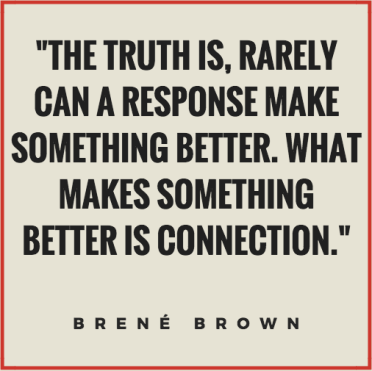
Justin Stygles, a friend/mentor, who teaches in Maine started pushing my thinking about the role of shame in education at the 2015 NCTE Annual Convention. Our discussion about his passion of working to counter the impact of shame in teacher-student relationships challenged me to learn more about shame. Shame is something we all deal with, but we are very unwilling to discuss, especially in public conversations. I am pretty sure that Justin’s thinking led me to Brené Brown’s work. If you don’t know her work, a good place to start is the videos page of her website.

My learning and thinking about shame, which led to more understanding about vulnerability, empathy, connection, and guilt, is the reason my thinking about my daily decision-making always starts with how I responded to students during the course of the day. Sometimes I feel like I had a great day, sometimes I know I screwed up a few times, but I am getting better at understanding that how I respond to students has a profound impact on not only my relationship with them as individuals, but the entire classroom community.

Brian Wyzlic shared a moving story about a response he had to a student transgression on this site last week. To be honest, his post reminded me of the thinking I have done the last few years. I had another post ready to go, but his ideas of grace and mercy and choosing to build connections rather than tear them down kept running through my brain.

I am not sure how I would have handled a student saying, “Oh, f***” in my room. Depending on the student I may have been disappointed, concerned, surprised or maybe I would have laughed out loud (because I love a well-placed obscenity as much as anyone I know). That being said, I am sure, like Brian, I would not have ripped into the student. Rarely, maybe never, does a verbal lashing help diffuse a difficult situation in the classroom.

We need to be honest with our students, we need to hold them accountable, and we need to let them know what is acceptable and unacceptable while at the same time showing compassion and empathy. When a student is not respecting the norms of the classroom or the school, we need to be able to respond to students in a way that lets them know that their behaviors are the problem, not that they are the problem.

I believe too many of our students feel they are wrong or they are awful. I have too much hope to think that any child is wrong. Behaviors can be wrong, but a child? I don’t think so.


Nurture the Dreams, Not the Explosions

The other day, I had a student in my office and she asked about the quote I had set as my desktop background: “It’s much easier to nurture a dream than to deal with an explosion,” a line from Ernest Morrell’s speech at the 2014 National Council of Teachers of English’s Annual Convention. Over three years later, it remains a line that I quote often to colleagues and use to guide my work with young people every day.

Before I knew it, I was down a rabbit hole. I was talking about Lorraine Hansberry’s A Raisin in the Sun and Langston Hughes’ “Harlem”; I was talking about the English teachers I have learned so much from yet do not directly know; and I found myself endlessly talking about why I want to teach, the safe space I want to create as an administrator, and how I can always do a better job of helping my school become the place where kids’ dreams are nurtured.

If we aren’t nurturing our kids’ dreams and sense of hope, who else is?

For some, no one.

So when I recently read Eric Jensen’s Teaching with Poverty in Mind and Jensen’s comments about hope, I started to think differently.

As Jensen points out, “learned helplessness” is not a “genetic condition.” Rather, it is “an adaptive response to life conditions…” in which “[students] believe that they have no control over their situations and that whatever they do is futile” (113).

I think we can all point to a student in our careers who has lost hope, who thinks that he or she can do absolutely nothing to change their life trajectory. I encourage you to pause right now, and picture them. Remember their name? Remember how they used to frustrate and challenge you? You may have even blamed them for a gray hair or two. They never seemed to respond to what you would say, and they would tell you again and again that they “don’t care or “will never care.”

That kid needs our help finding hope.

Jensen encourages teachers to talk to students about their dreams, their hopes, and their aspirations. But this talk also has to go beyond the mistake that Shanna Peeples, the 2015 National Teacher of the Year, shared in this podcast. If we only do surface-level work of just asking kids about their dreams and not really listening and talking, we can get—and accept—responses like that of the student she worked with, whose negative response ultimately became his outcome.

As educators, we also have to be aware that “Students raised in poverty are especially subject to stressors that undermine school behavior and importance” (27). This doesn’t mean that all students who live in poverty are subject to poor behavior, nor does it mean that that these students will perform poorly. They are, however, at a greater risk. If we really want to tend to those dreams, we, as educators, must be aware of that and teach students to recognize and overcome some of these stressors.

We must nurture those dreams, make relevant connections in our curricula, and continue insisting that students can take small steps to accomplish their goals. If we don’t, then we can find ourselves managing more of the “explosions” that Morrell talked about in his speech. After all, it’s easier for a student to realize that yelling, screaming, stomping out of our classroom will earn him or her a “pass” at the day’s work. But if we are truly serious about nurturing those dreams, we have to think in terms of empowerment and persistence. Like Jensen also argues, “Instead of telling students to act differently, take the time to teach them how to act differently” (30). We won’t accomplish it in a day or a quick lesson about grit or mindset. Instead, we have to be as hopeful and relentless as we can be.


Halfway Here: The Just Ten Challenge

Halfway there.
We are halfway there.
Near equidistant from the first day of school to the last…
I still have beginning of the year “to dos” and aspirations hanging in limbo, waiting for a minute of my attention.
The pile of manila folders I placed on my cabinet in September still sits there.
I’ve been running on the binder creating, Google Drive organizing, classroom library reshuffling gerbil wheel all year.
And I think I forgot to tear off yesterday’s page on my daily desk calendar.

Today was a rainy day. In Wisconsin. In January.
Thunder and lightning, puddles and humidity.
Cloudy and gloomy.
Gray.
And it felt like it.

It was one of those days where the air and the energy was heavy. District math testing. Indoor recess. Winding down reading and writing units. A student meltdown. It was a slow motion, going-through-the-motions sort of day for the kids and me, and I came home defeated and frustrated. Today lacked luster. Today was mundane. Today was mediocre. But it wasn’t without its joyful moments. To shake off the dust for tomorrow, I was determined to consciously remember and recognize those highlights. Closing my eyes and thinking back on my day, I realized it wasn’t too difficult to name the good in our day.

Andrew brought in his Spirograph tracers to share with his friends during our morning “Spark & Shine” soft start choice time. Kaylah wrote a heartfelt dedication to her dog in the informational book she is writing on how to raise a puppy. Amir jumped into a new favorite series to push himself as a reader. Akilah finished the third book in her series, the most of a series she’s ever read before. Elijah said, “Have a great lunch Mrs. Werner!” on the way out the door. We all laughed during our end of day read aloud. And that’s just what came to mind right away.

This got me thinking…we all have our highs and lows during the school year, but as educators, we often sell ourselves short considering all that we have taught and facilitated with our students. We get stuck on what we have yet to accomplish, the unmemorable days, and the unsuccessful teaching moments we have experienced, that we leave little time to reflect on all that is good and joyful and celebratory in our classrooms. In the mood to make lists and at an appropriate point in the year to be more deeply reflective, I challenged myself to jot down the first ten moments that came to mind that were unforgettable, heartwarming, profound, and positive. Just ten! I was hoping I would prove to myself that even on this gray day, there is, and has been, so much to celebrate.

  1. Getting emails from parents elated that their children are for the first time excited about reading and choosing to read on their own for pleasure in their spare time.
  2. “Hey, he looks just like me!” said Marius, an African American student upon seeing a childhood photo of Jason Reynolds in People magazine, after the author did a visit to our school. The power of mirrors.
  3. Twitter. Students tweeting at their favorite authors and receiving tweets back.
  4. Making Claymates inspired by Dev Petty’s and Lauren Eldridge’s book of the same name. Watching them come alive through student-created stop motion videos was awe-inspiring. Especially Dominic, who channeled his creative energy and ever moving body into unique and clever claymated narratives.
  5. Hiking in the fall with our kindergarten pals in the woods where we discovered the beauty of the natural world readying itself for winter…and a skull. An animal skull we brought back with us that turned into a spontaneous science lesson to identify it the next day. Armed with magnifying glasses, iPads, books, sketching tools, they wondered and sought to learn more.
  6. We are fresh off of Skype visits with authors Shelley Johannes and Debbi Michiko Florence, we are inspired by their advice and experience as writers. Connecting to authors in real time is magical.
  7. “I used to not like math, but this is fun!” And in related news, “Do we have to stop writing to go to recess?”
  8. Field trip to the Milwaukee Film Festival to see the children’s shorts program. Watching the kids’ reactions as much as the films themselves, I witnessed laughter, tears, wonder, and surprise across their faces.
  9. The day we finished reading Stone Fox together. You know the part. Pass the tissues. And a hug.
  10. Kalani found her heritage in Jasmine Toguchi Mochi Queen, which turned her into a book lover and frequent snail mailer and Twitter pen pal with the author.

Wait! That’s ten already?! But I have eleven and more! It may still be dreary outside, but the gray cloud is lifting from my day. Now, I challenge you to do the same. Pause during your day. In your mind, on paper, in a doc, wherever, what ten moments come to mind that showcases the awesome in your school year? Instead of thinking about counting down the days, let’s look back at how far we’ve come. We’ve built communities, class families, and made an impact on our children.

We are not halfway there.
We are halfway here.
Halfway here.

Share your #JustTen moments in the comments below or on social media with #ClassroomCommunities!
*All names have been changed to protect students’ privacy.

IMG_5366IMG_3821

IMG_3803